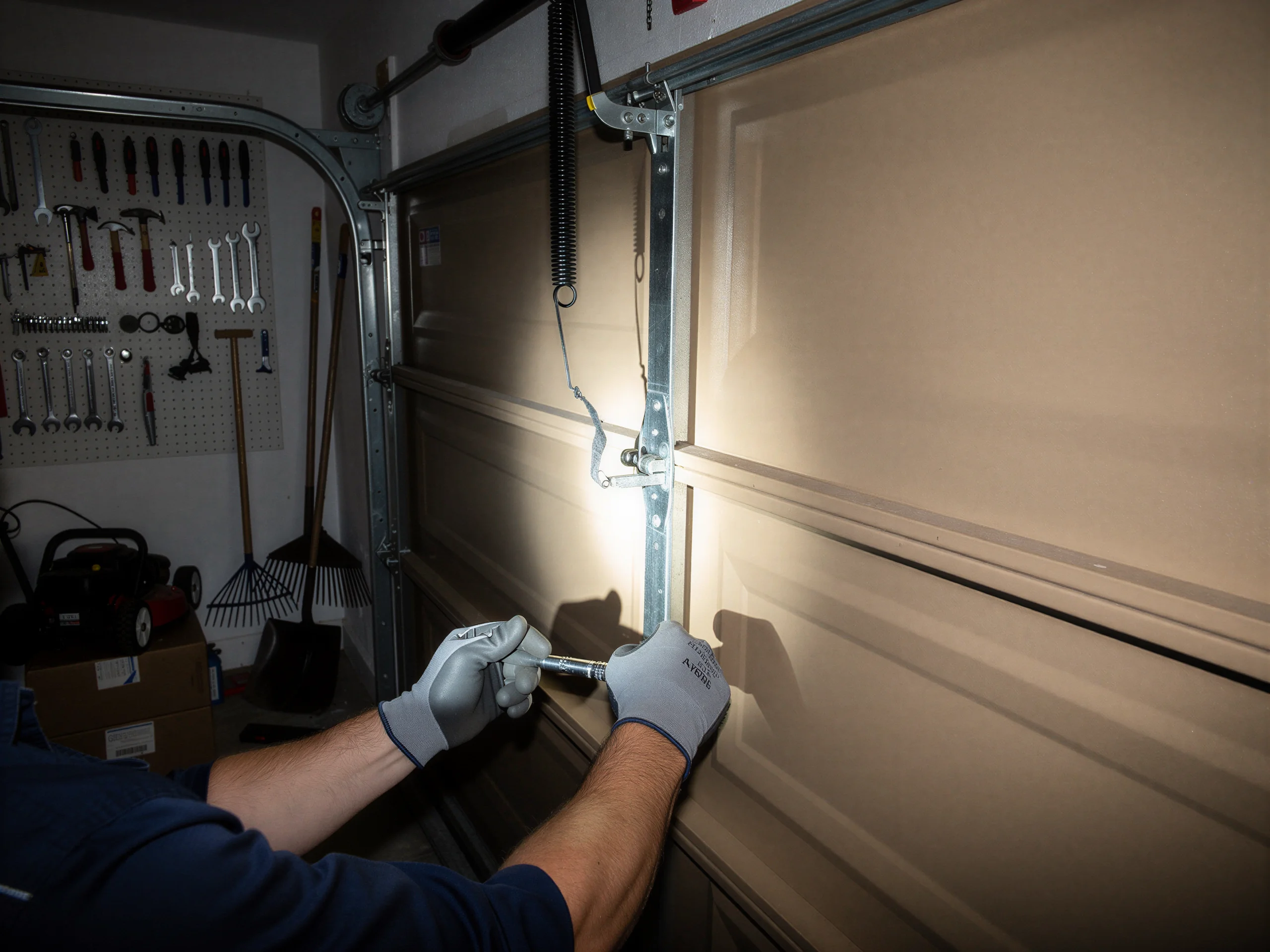
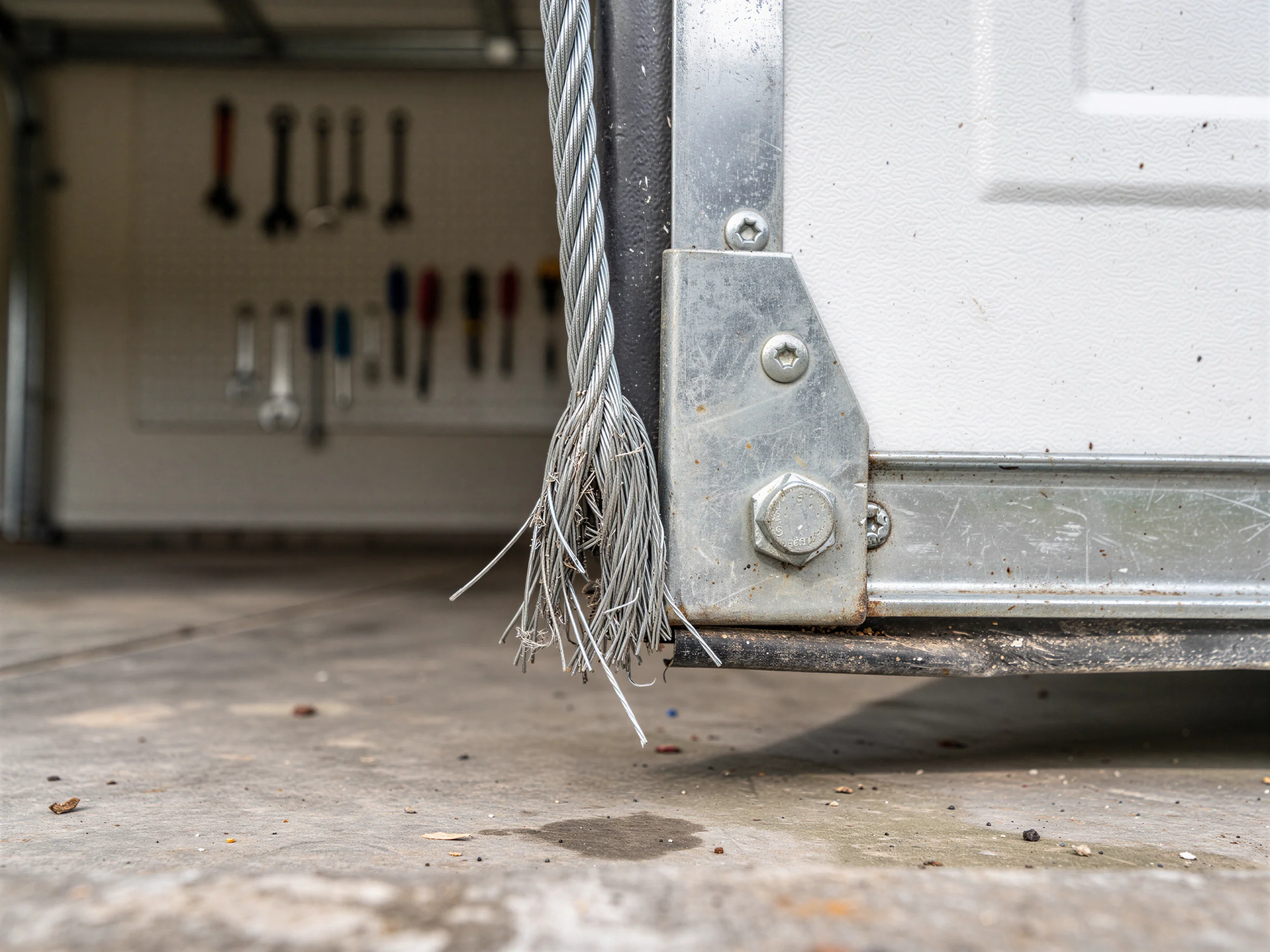
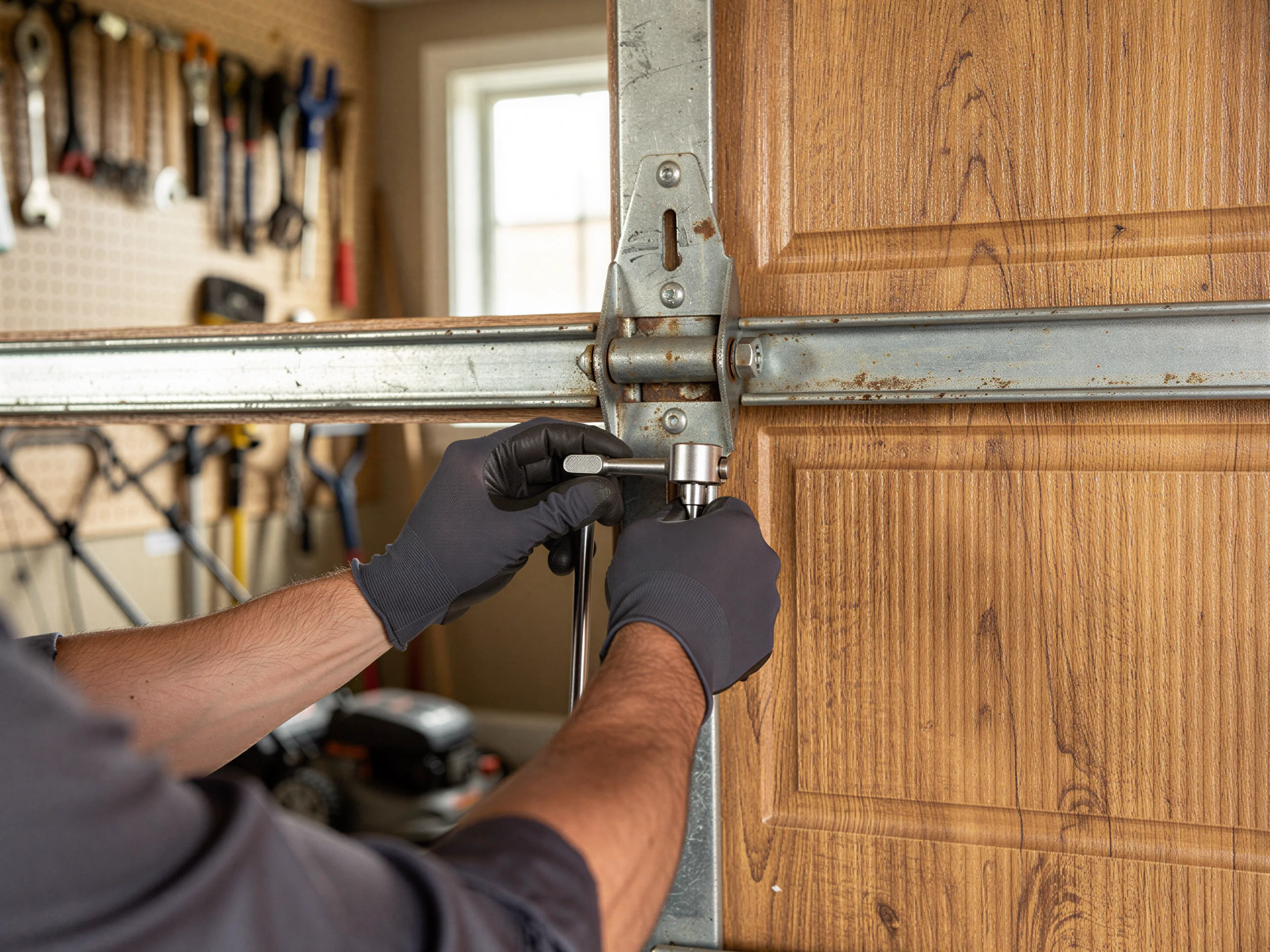
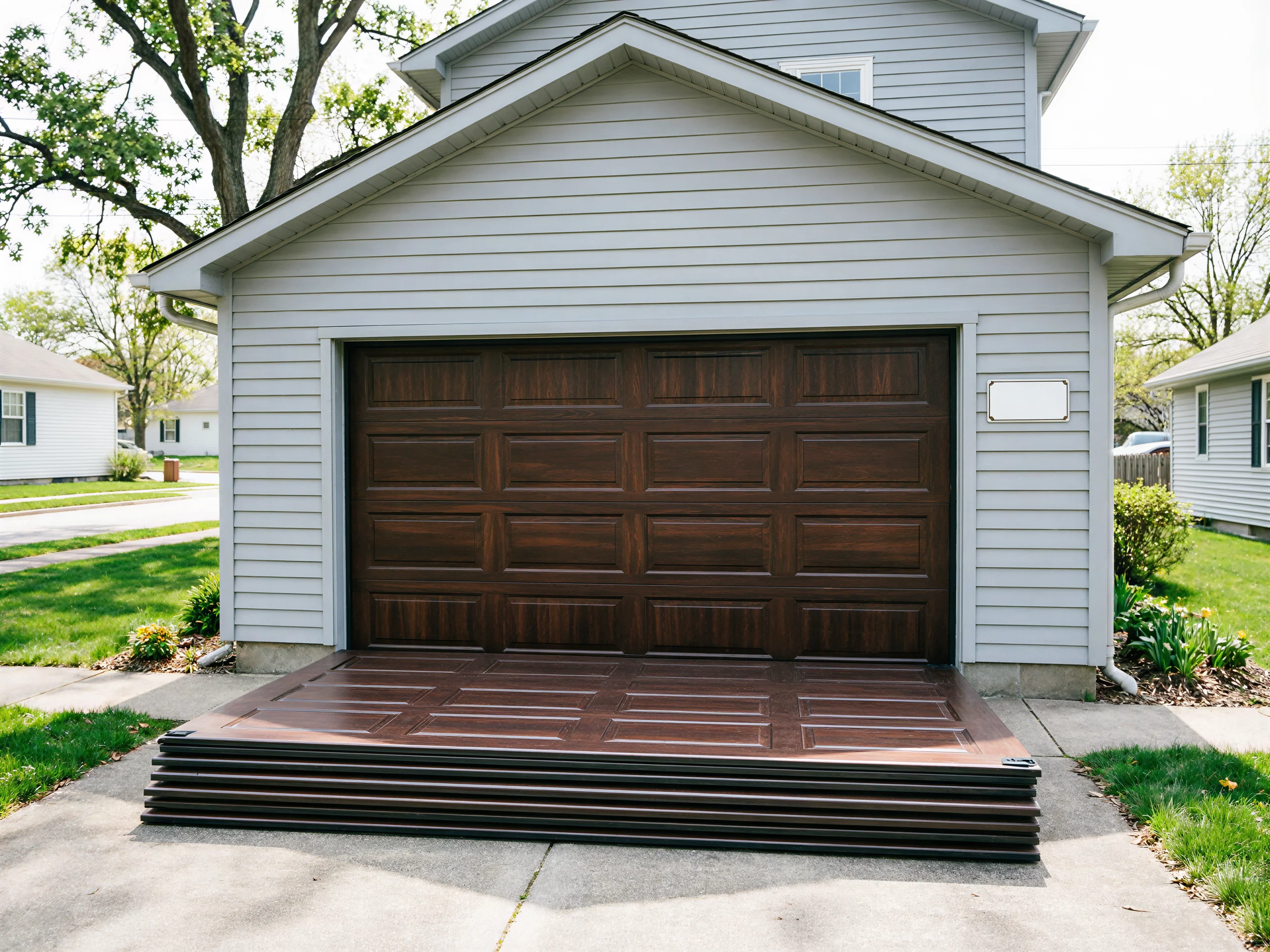
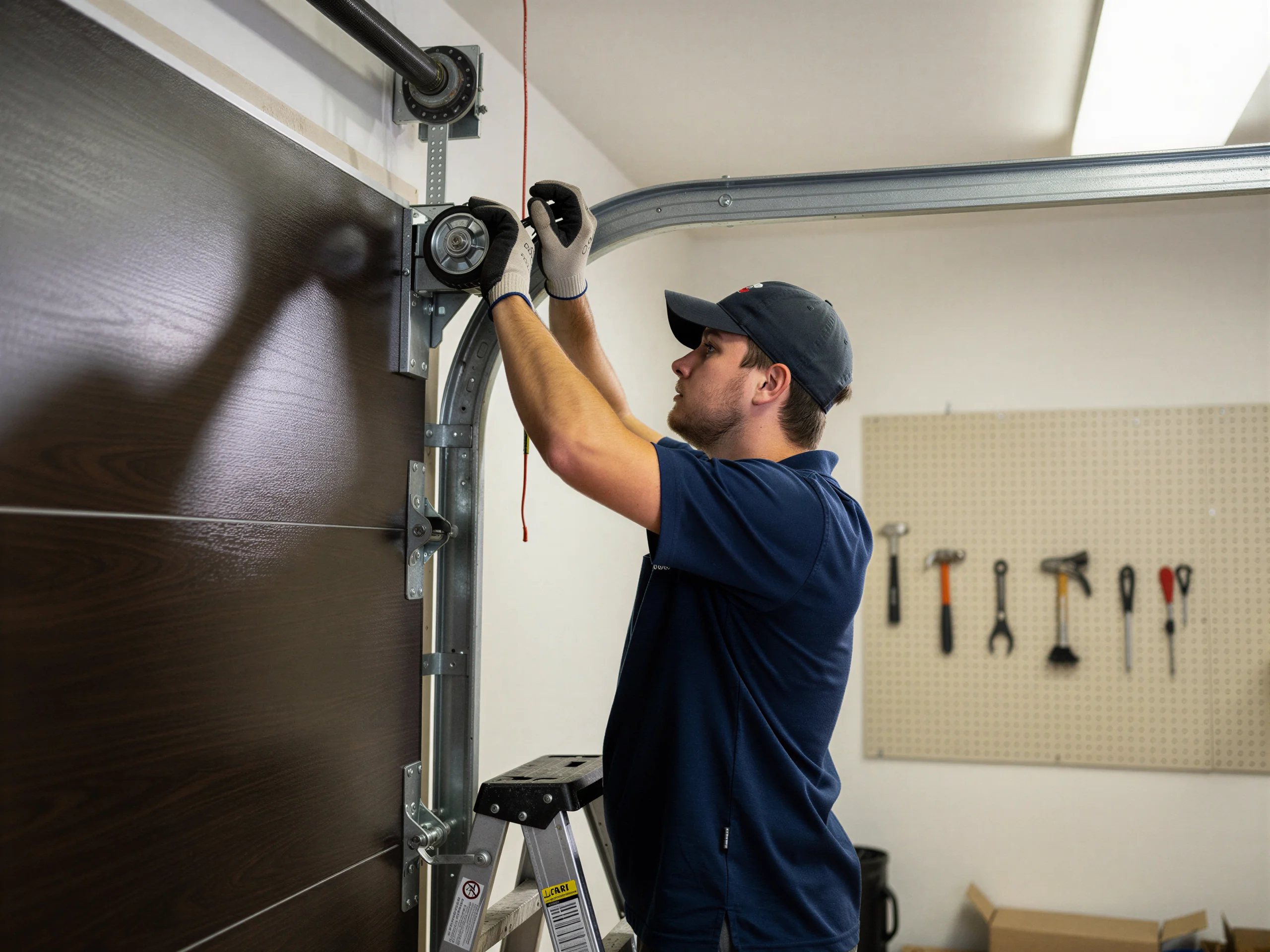
On 1980s-era doors, the failure we see most is the torsion spring losing temper after years of winter temperature swings - the metal doesn't snap suddenly out of nowhere, it fatigues, and a cold morning is often what pushes a weakened spring past its limit. Second most common: the cable that runs alongside the spring frays at the drum end, usually unnoticed until the door drops unevenly on one side.
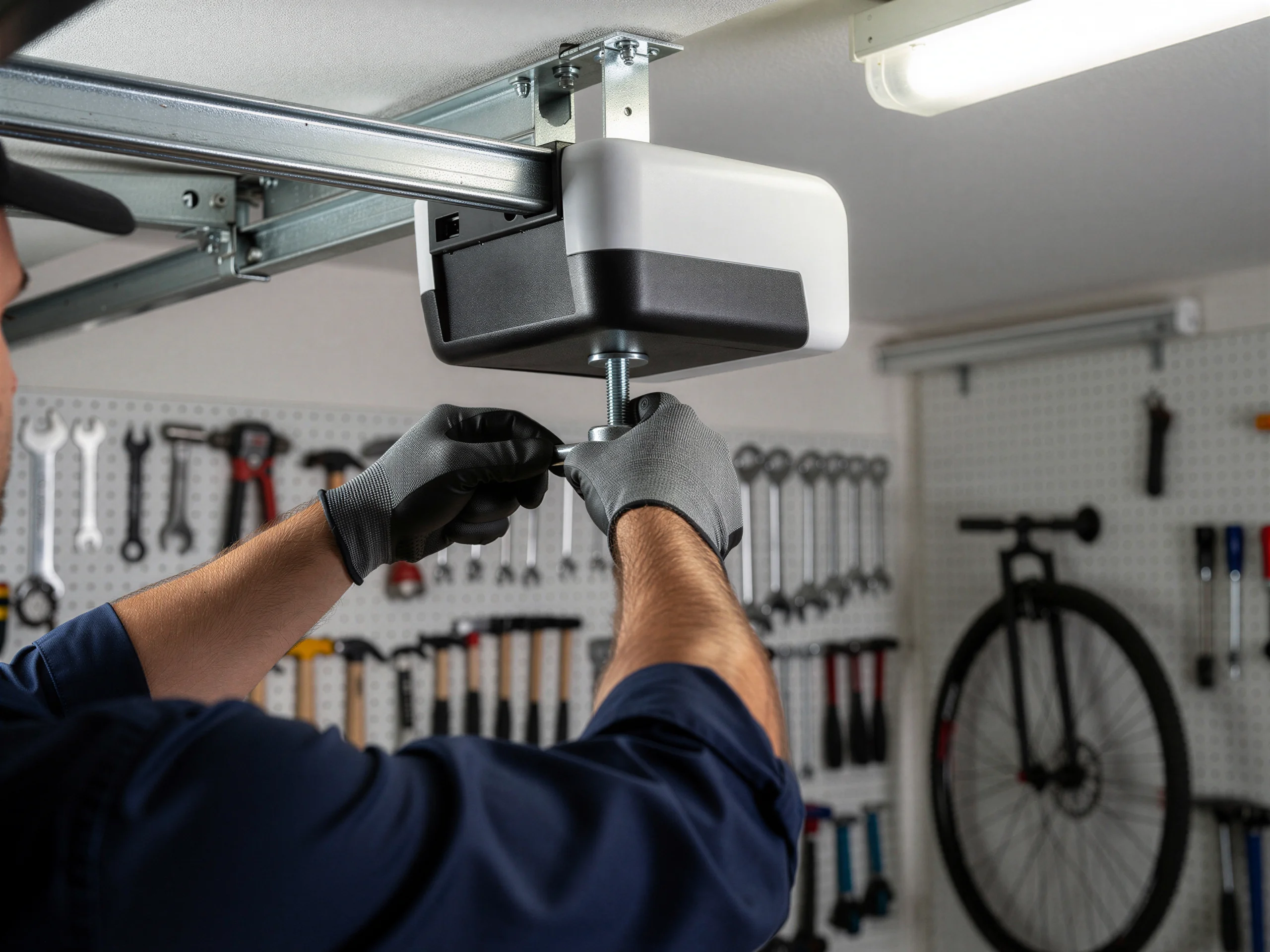
Opener-side, a door from this build era is old enough that the original opener has likely been swapped at least once, so the opener you have now may be newer than the door itself - which matters when a tech is figuring out whether a problem is mechanical or electrical. A door that reverses right after closing, or that opens a few inches and stops, points to the opener's force settings or a misaligned photo-eye sensor rather than the spring.
The one thing we won't do is replace a spring on a door with a badly bent track or a warped panel and call it fixed - if the track's bent, the new spring just fights bad geometry and fails again faster. Sometimes the honest call is that the door needs more than a spring, and we'll say so rather than patch it.