Jefferson City, MOSame-day service/Free estimates/Licensed & insured(573) 235-7235

Jefferson City, MO

Garage Door Maintenance Across Jefferson City

Garage door maintenance built around Jefferson City's 1938-2003 housing stock and cold winters - what fails, what to check, and when a tune-up beats a repair call.

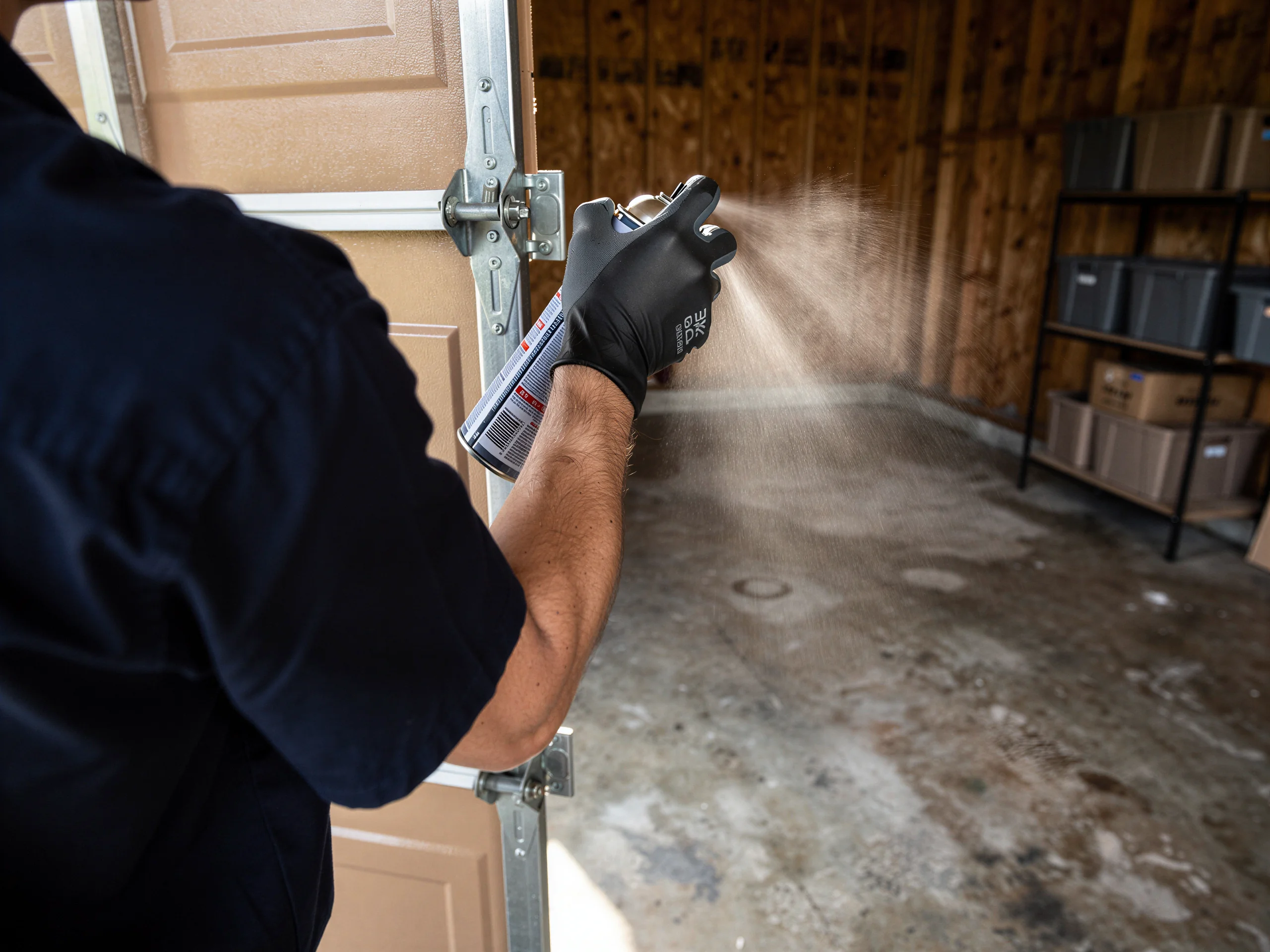
A technician sprays lubricant on a garage door hinge.
What we do
  • Garage Door Repair
  • New Door Installation
  • Springs & Openers
Serving Jefferson City, MOBackground-checked techsHonest, upfront pricingFast local response
Local
Crews that work this area daily
Same-day
Response for most repair calls
Upfront
Pricing agreed before we start
Insured
Background-checked technicians

Local causes

Why This Fails Locally

Most of the housing stock in the Jefferson City service area went up between 1938 and 2003, with the median build year sitting around 1974. That matters for maintenance because a door and track system installed in the 1960s or 70s has been through fifty-some winters of temperature swings, and the hardware ages differently than anything built in the last fifteen years. Across the nine named areas we work in, you'll find a mix of original torsion springs, steel tracks that have loosened at the jamb brackets over decades of use, and openers that have been swapped once or twice but mounted on the same aging header.

The cold-moderate climate band this area sits in means grease hardens, metal contracts, and rollers that were fine in August bind up in January. A door that's never had the track realigned or the spring tension checked will show it first on the coldest mornings of the year, not gradually. That's the pattern we see across the whole service area - it isn't one street or one subdivision, it's the age of the housing meeting a climate that punishes neglected hardware twice a year, at the start and end of winter.
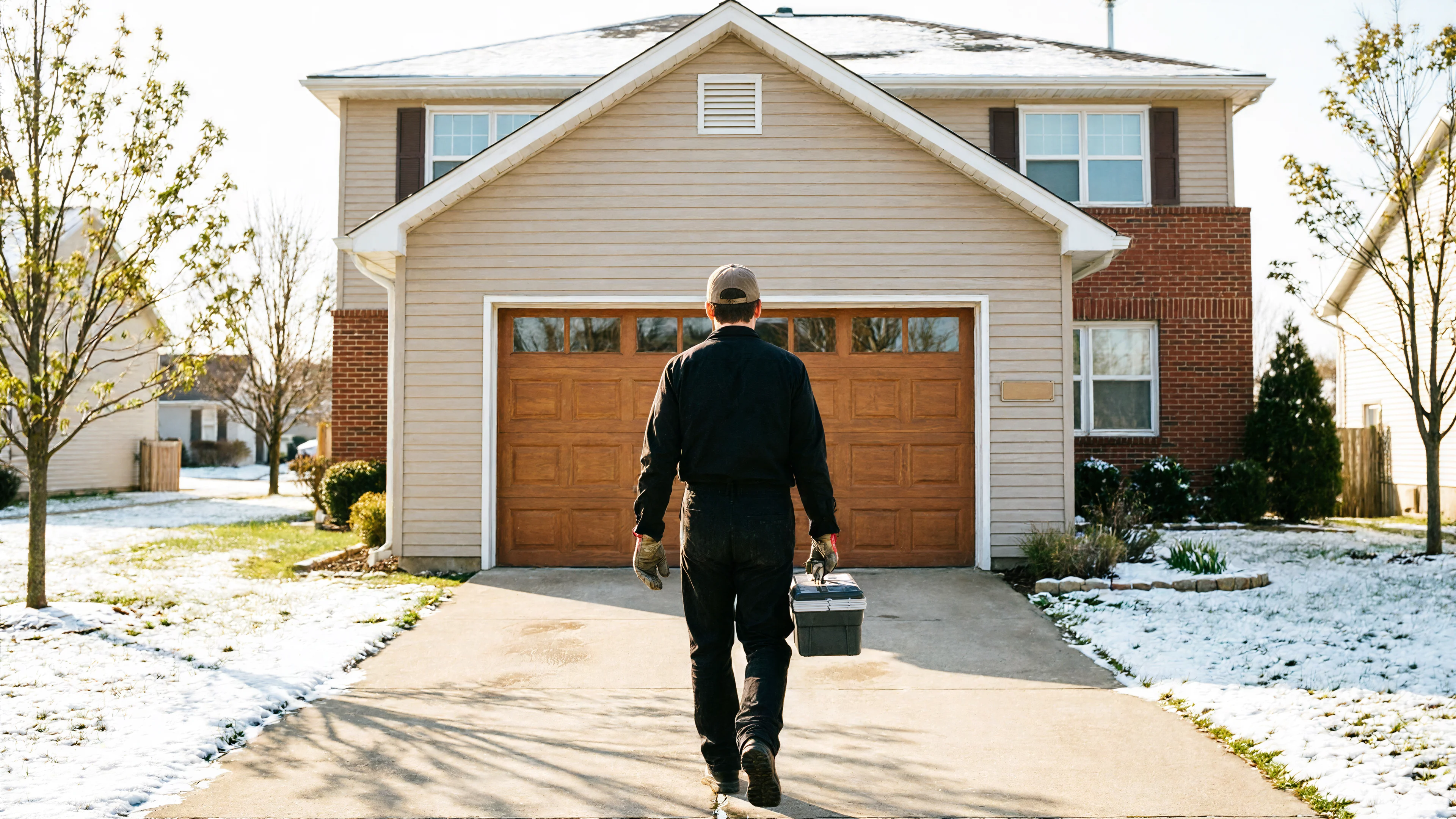
A technician walks toward a house with a brown garage door on a snowy day.

DIY or pro

The DIY Question

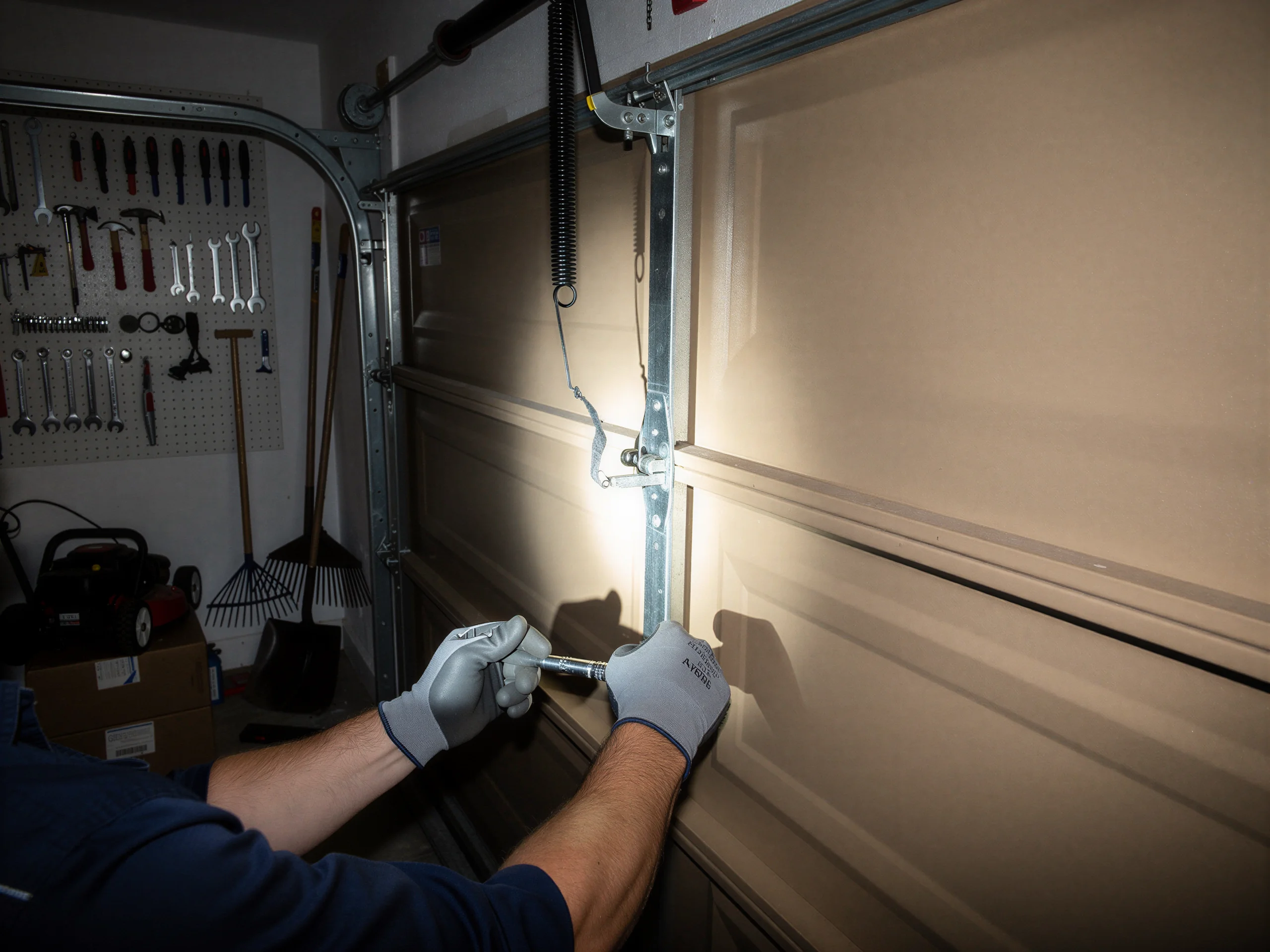
Some of this is reasonable to do yourself. Wiping down tracks, checking that the auto-reverse safety feature still works, and tightening visible hardware bolts are things most homeowners can manage with a wrench and twenty minutes.

Loose track brackets

If your door was built when this area's median home was built - early 1970s or so - the track brackets have had decades to work loose from the jamb, and a lot of noise complaints trace back to nothing more than loose lag bolts. What you should not touch is the torsion spring.

Stored spring tension

These are under enough stored tension to break a hand or worse, and on a house from this era the spring has likely never been replaced, which means it's at or past the end of its practical life. If you hear a bang from the garage and the door won't move, that's a spring, not a track problem, and it's not a DIY job regardless of how many videos say otherwise.

Tune-up booking limits

One honest limitation: we don't do same-day annual tune-ups during the first hard cold snap of the season. Call volume spikes and we book out. If you want a fall or spring maintenance visit instead of an emergency one, schedule it before the first freeze, not after.

Warning signs

What You Are Seeing

A door that shudders partway up, hangs for a second, then jerks forward is almost always a spring losing balance - common on houses with original or near-original springs from the 1960s-70s building wave.

Grinding near the floor

A door that's quiet at the top of its run but grinds on the bottom few feet usually points to track misalignment at the floor plate, which happens as a house settles over fifty-plus years.

Louder motor over time

If the opener strains and makes a louder motor sound than it used to, check whether that's new or whether it's always done it - a motor compensating for a weak spring will get louder gradually, while a motor with a worn gear will get louder suddenly.

Worn galvanizing rust

Rust streaks on the tracks or hinges, especially after a wet winter, are a sign the galvanized coating from an older install has worn through and the steel underneath is starting to go. None of these are emergencies the day you notice them, but none of them get better on their own either.

Watch-outs

What Can Go Wrong

Leave a misaligned track long enough and the rollers wear unevenly, which then chews up the track itself - a $20 adjustment turns into a track replacement.

Aging springs break suddenly

Leave an aging spring unchecked and it eventually breaks, usually while someone is standing in the doorway, which is the actual safety reason this matters and not just a sales line.

Dry hardware strains gears

In a cold-moderate climate, unlubricated hardware doesn't just get noisy - it transfers extra load to the opener's gear and drive mechanism, and that's the part that actually costs money to replace.

Annual checks prevent emergencies

Across the roughly 3,182 owner-occupied houses we see cycling through this kind of wear and tear, the doors that get an annual check rarely end up needing an emergency spring call; the ones that don't, eventually do. Maintenance here isn't cosmetic - it's the difference between a scheduled visit and an unscheduled one at 7am on the coldest morning of the year.

Questions

Common questions

How often should I get my garage door serviced in Jefferson City?

Once a year is the baseline, ideally before winter sets in given the cold-moderate climate here. Houses built in the 1960s-70s wave that makes up a lot of this area's stock benefit from a fall check on spring tension and track alignment before the first hard freeze.

Is a noisy garage door always a spring problem?

No. Noise can come from loose track brackets, dry rollers, or worn hinges - all common on older housing stock in this area. A banging sound followed by the door refusing to move is the spring signature. Grinding near the bottom of the run usually points to track alignment instead.

Can I do garage door maintenance myself?

Basic tasks like wiping tracks and checking auto-reverse are fine to do yourself. Torsion springs are not - they hold enough tension to cause serious injury, and on a home from this area's median build era the spring is likely original and near the end of its life.

Explore more

Explore More Services In Jefferson City, MO

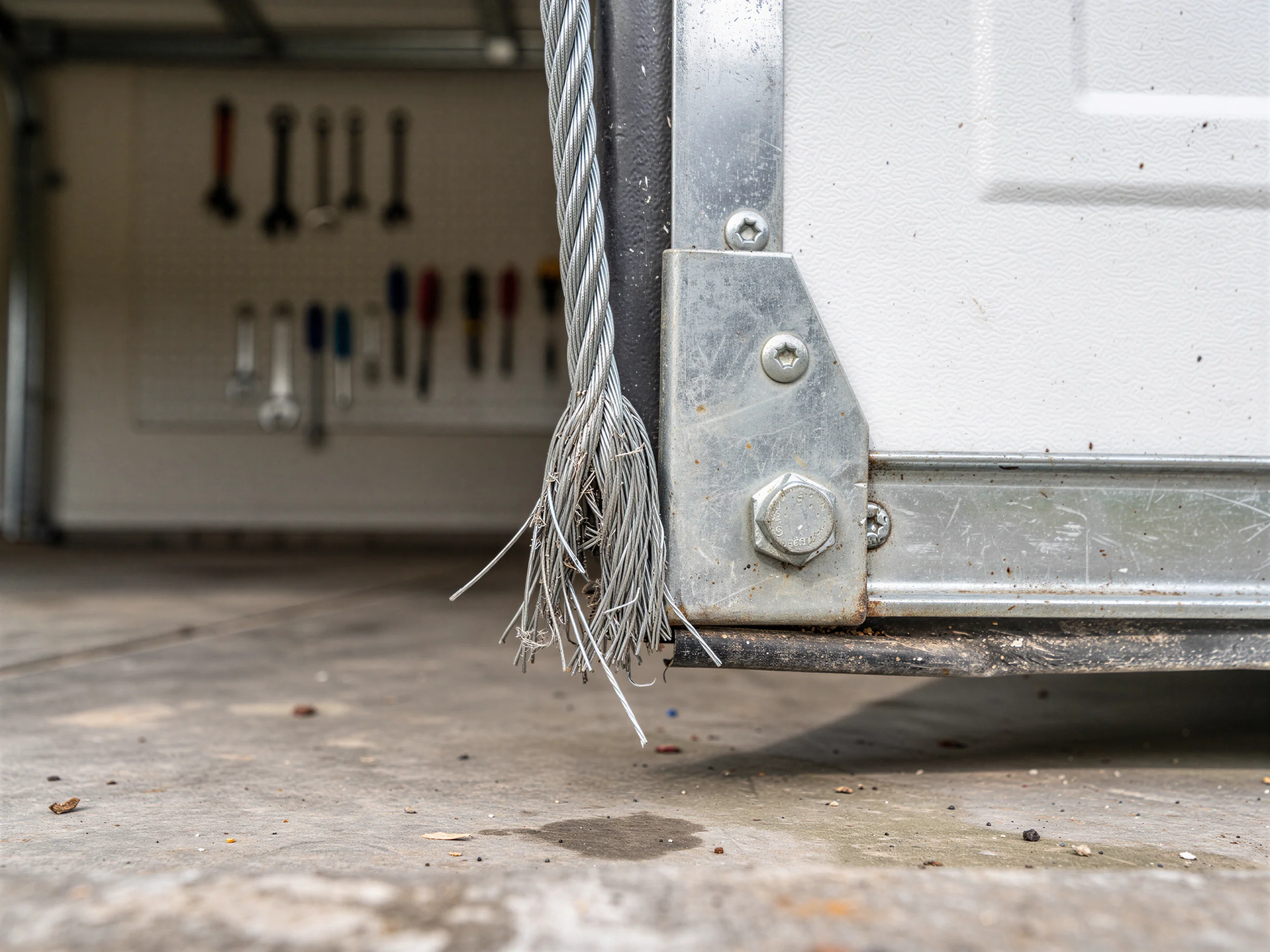
A frayed garage door cable hangs next to a white garage door panel.

Garage Door Cable Repair Around Jefferson City

Cable repair for Jefferson City homes built mostly in the 1960s-70s, where original hardware and cold winters wear lift cables faster than newer stock. Learn more →
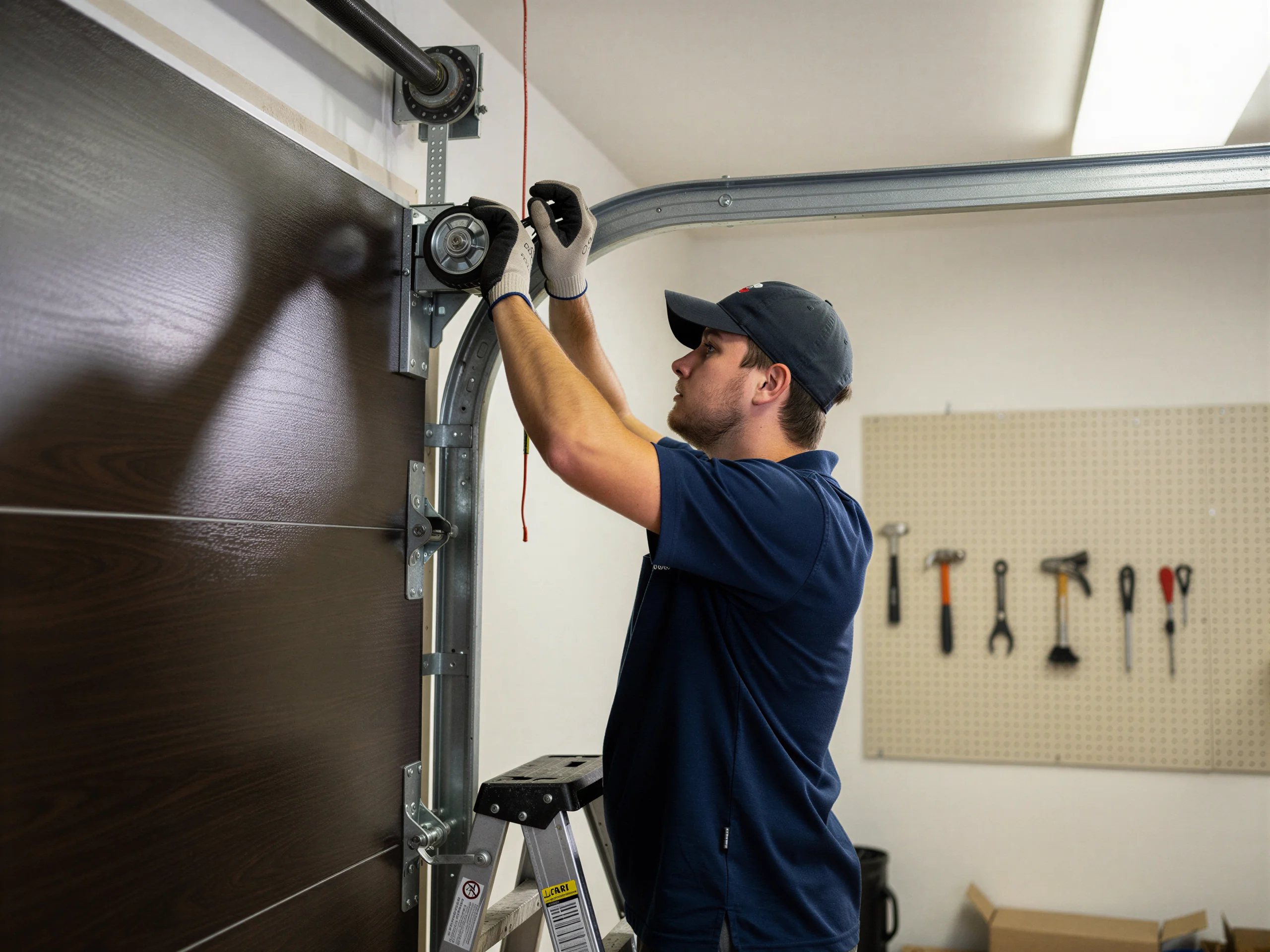
A technician on a ladder adjusts the top roller of a brown garage door.

Garage Door Roller Replacement, Jefferson City MO

Rollers wear out fast on the 1960s-70s doors common across Jefferson City. Learn more →
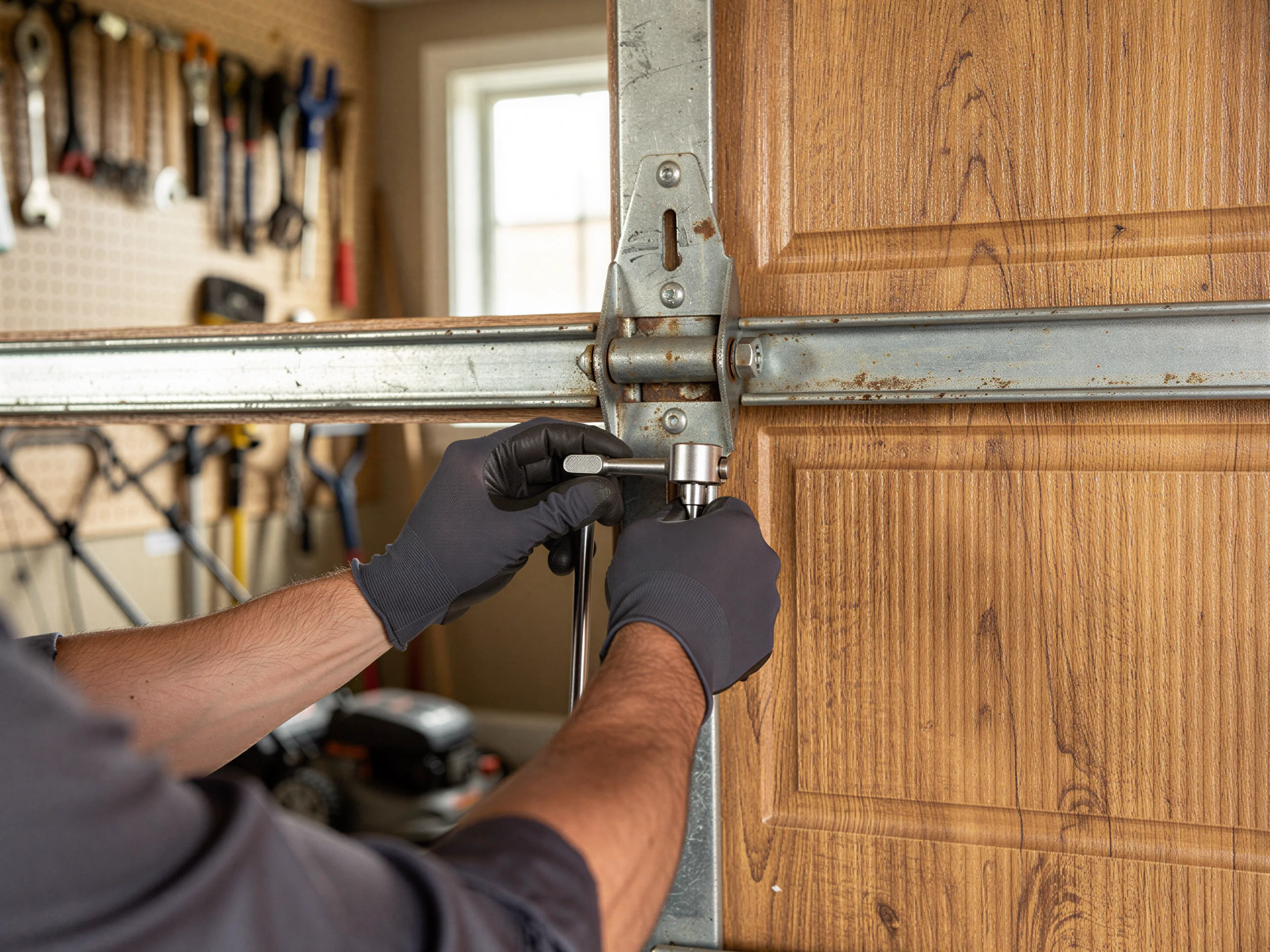
A technician in black gloves adjusts a garage door hinge with a wrench.

Garage Door Repair Built Around Jefferson City's Housing Stock

Garage door repair for Jefferson City homes built 1938-2003, where original torsion hardware and cold-weather spring fatigue cause most of the service calls we see. Learn more →
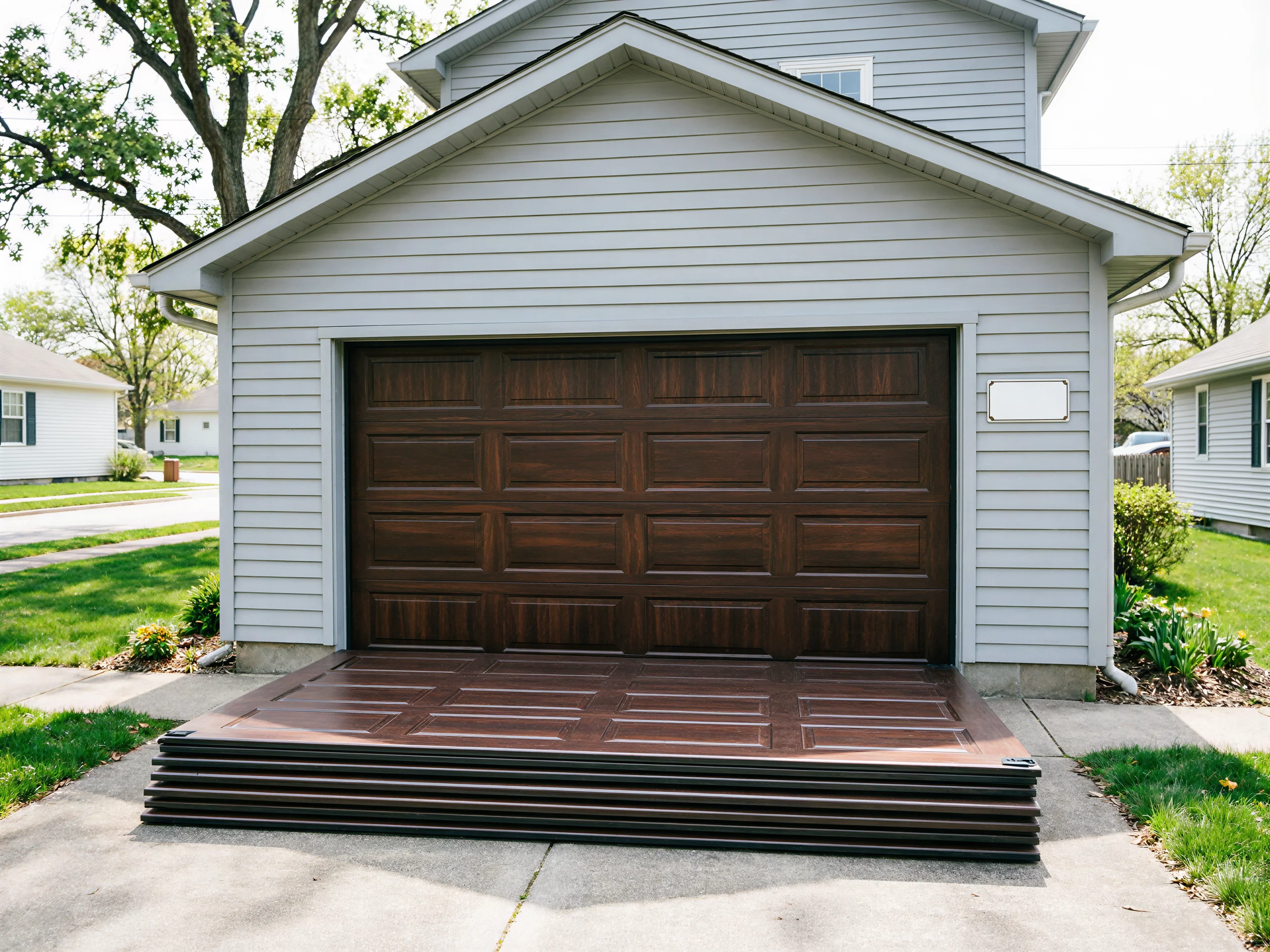
A brown garage door is installed with new panels stacked on the driveway.

Garage Door Installation Built for Jefferson City Houses

Jefferson City homes built 1938-2003 often carry doors and track sized for a different era. Learn more →
A technician sprays lubricant on a garage door hinge.

Garage Door Repair in Jefferson City, Built for 1960s-70s Homes

Jefferson City garage doors mostly date to the 1960s-70s building boom; our cold-climate-rated springs and tracks handle winter swings without failing. Learn more →

Ready when you are

Need a garage door sorted in Jefferson City?

Jefferson City Garage Door Pros repairs and installs garage doors, springs and openers in Jefferson City, MO and the surrounding area.

Call Now(573) 235-7235