Safe DIY maintenance tasks
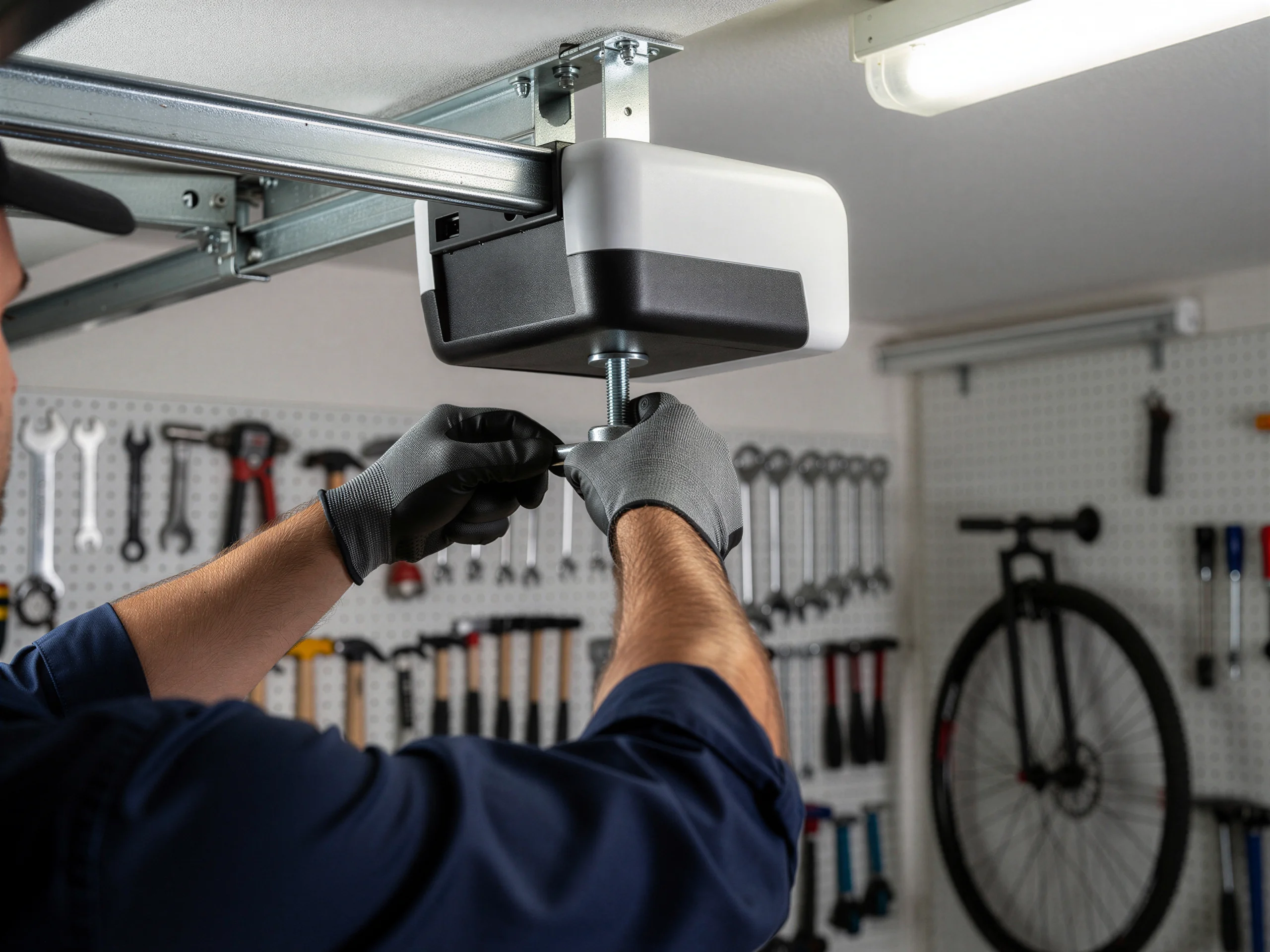
If you're comfortable with a reciprocating saw and a tape measure, you can replace rollers, lubricate hinges, and tighten loose track bolts yourself. That's real maintenance and it extends the life of an older door.
Jefferson City, MO
Garage door repair for Jefferson City homes built 1938-2003, where original torsion hardware and cold-weather spring fatigue cause most of the service calls we see.
Local causes
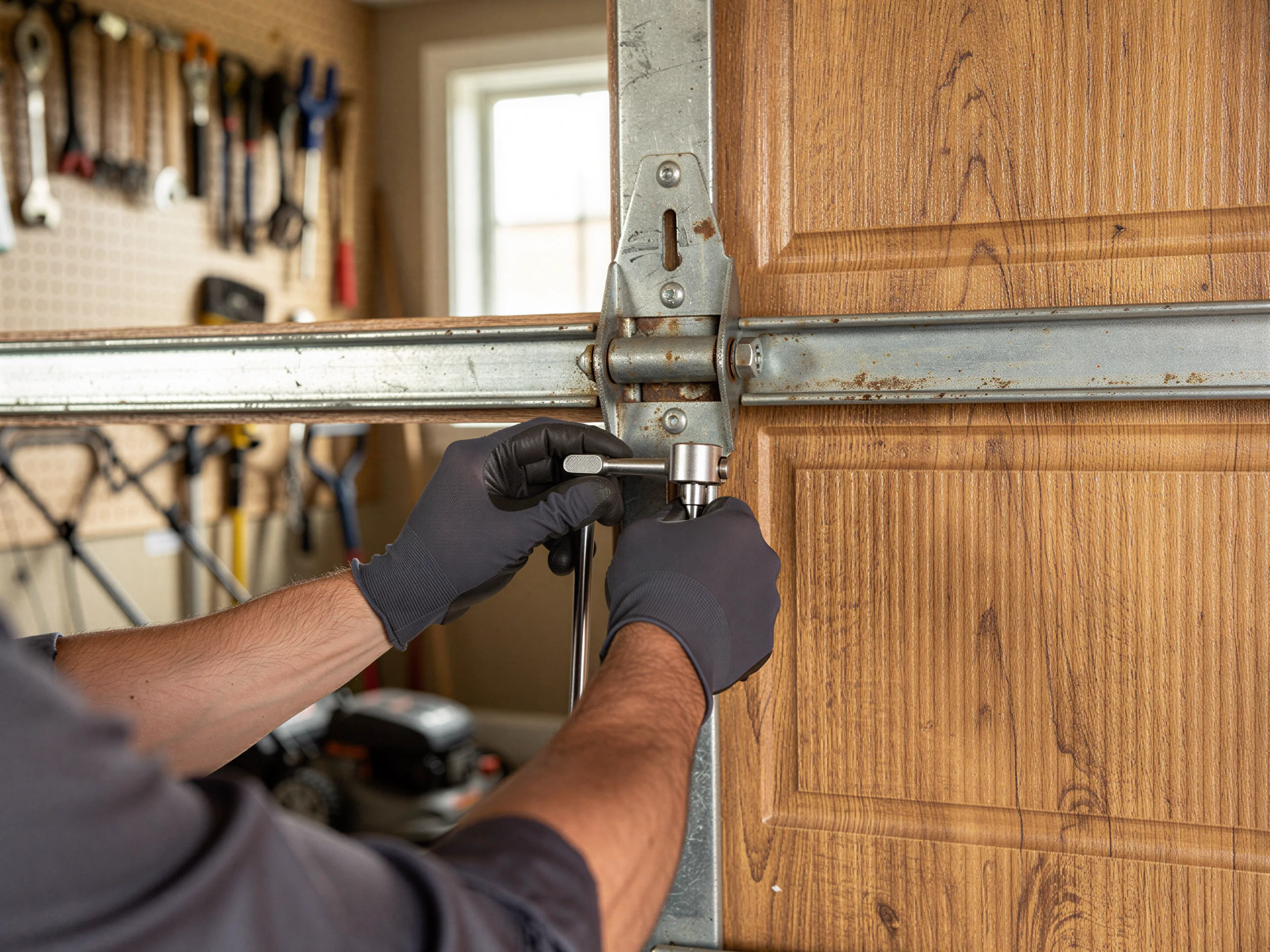
Most of the garage doors we get called on in Jefferson City were installed when the house was built, and that matters because the bulk of this area's housing went up between 1938 and 2003, with a median build year around 1974. A door and opener from that era, especially across the nine older neighborhoods that still carry 1960s-70s stock, wasn't built for forty-plus years of daily cycling. Steel panels from that period are thinner than what's sold today, and the torsion springs were sized for the door weight and cycle counts of the time, not for the decades of use they've since logged.
Layer the climate on top of that. Jefferson City sits in a cold-moderate band, which means real freeze-thaw swings every winter. Steel contracts in the cold, grease stiffens, and a spring that was already near the end of its rated cycle life loses tension faster when it's cold every morning and warmer by afternoon. That's not a flaw in any one door - it's what happens to original hardware from a 1970s build sitting through forty-plus Missouri winters. We see the same failure pattern across the older sections of town for exactly that reason.
DIY or pro
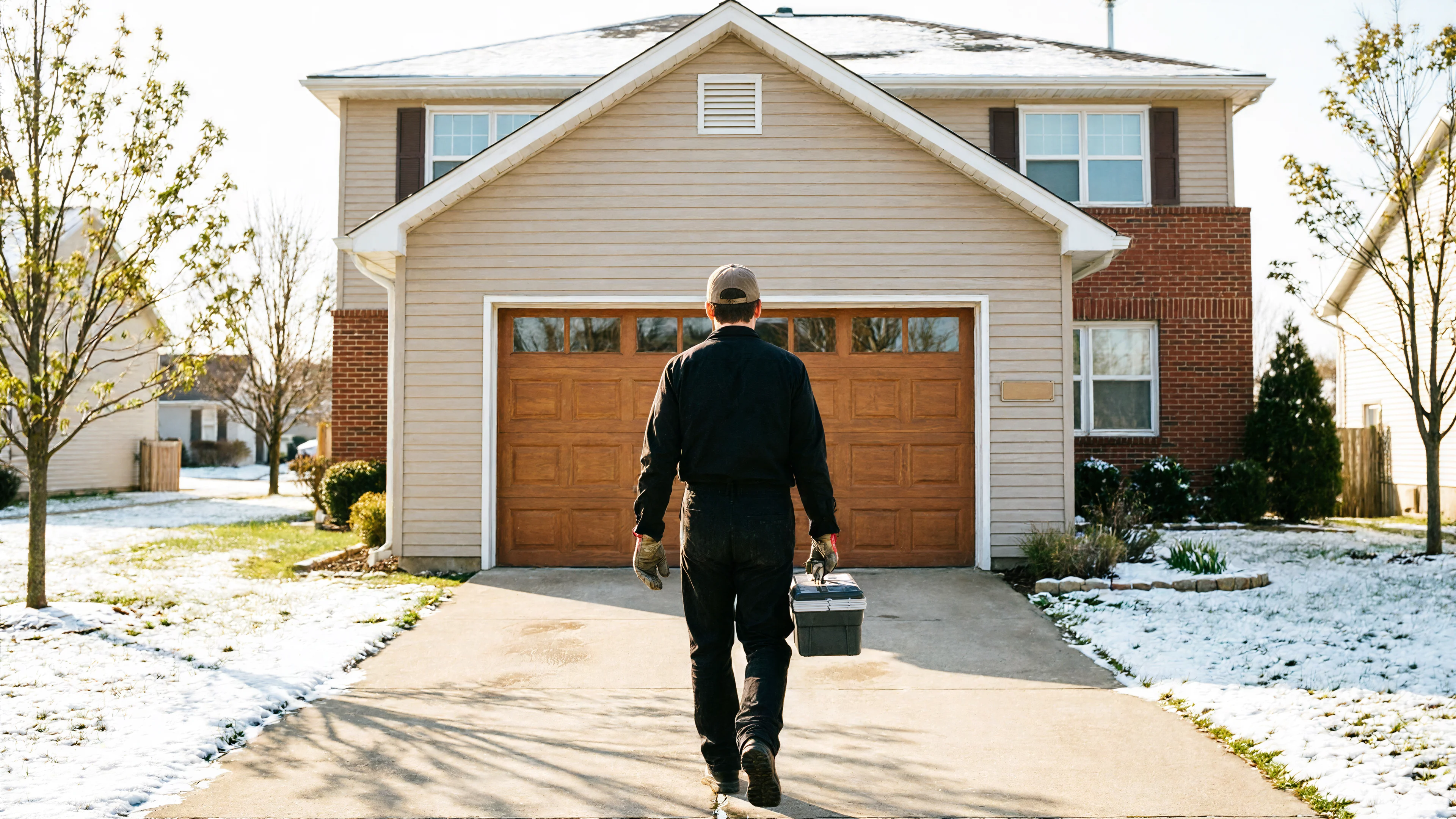
A torsion spring under tension can take a finger off, and on a door from the 1960s-70s stock common here, the hardware is often original - meaning the winding cones and shaft may not match what's sold in stores now.
If you're comfortable with a reciprocating saw and a tape measure, you can replace rollers, lubricate hinges, and tighten loose track bolts yourself. That's real maintenance and it extends the life of an older door.
What you shouldn't touch is anything holding tension: torsion springs, the cables that run beside them, or the drums at either end of the shaft. We also won't pretend every repair is worth doing.
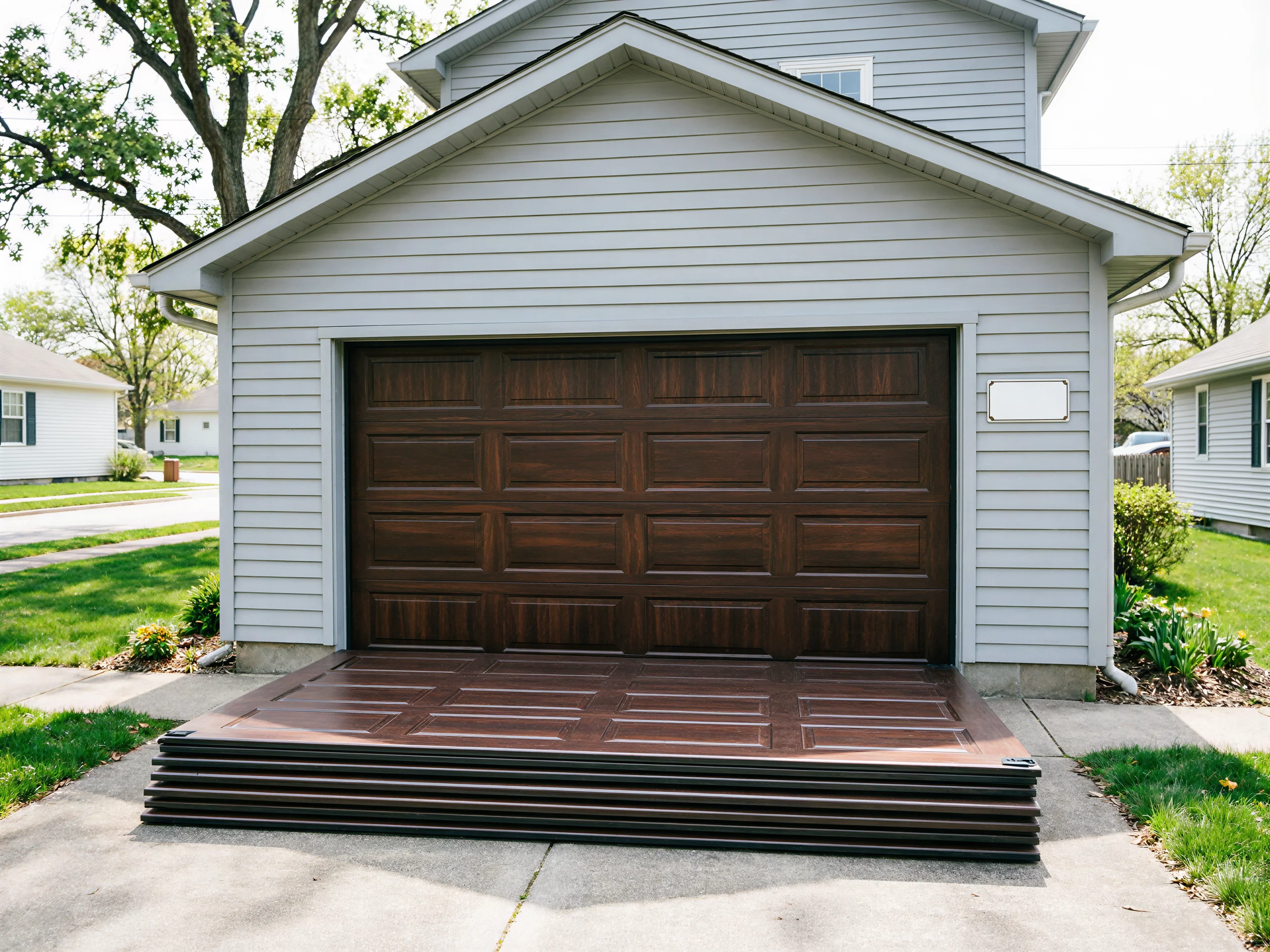
If a door built in the 1970s has a rotted bottom panel on top of worn hardware, putting more money into springs and cables on a door that's already failing elsewhere isn't a good use of your money - replacement usually wins at that point, and we'll say so rather than sell you a patch job.
Warning signs
If your door is loud, slow to start moving, or hangs crooked on one side, that's consistent with aging hardware from the 1938-2003 building window rather than something newer.
A door that reverses right after it touches the floor, or that the opener strains to lift, often points to a spring that's lost tension - common on original equipment that's been through years of cold-to-warm swings typical of this area's winters.
Gaps at the bottom corners, rust streaking down from the hinges, or a track that's pulled slightly away from the frame are also signs we associate with older builds here, particularly in the neighborhoods still running 1960s-70s doors.
None of these mean the whole unit is dead, but they're worth a look before the spring lets go entirely, usually at the least convenient moment - cold mornings, when tension is already at its tightest from the night before.
Watch-outs
The failure we see most in this service area is a torsion spring snapping outright, usually on a door old enough to be original to a house from the 1938-2003 build range.
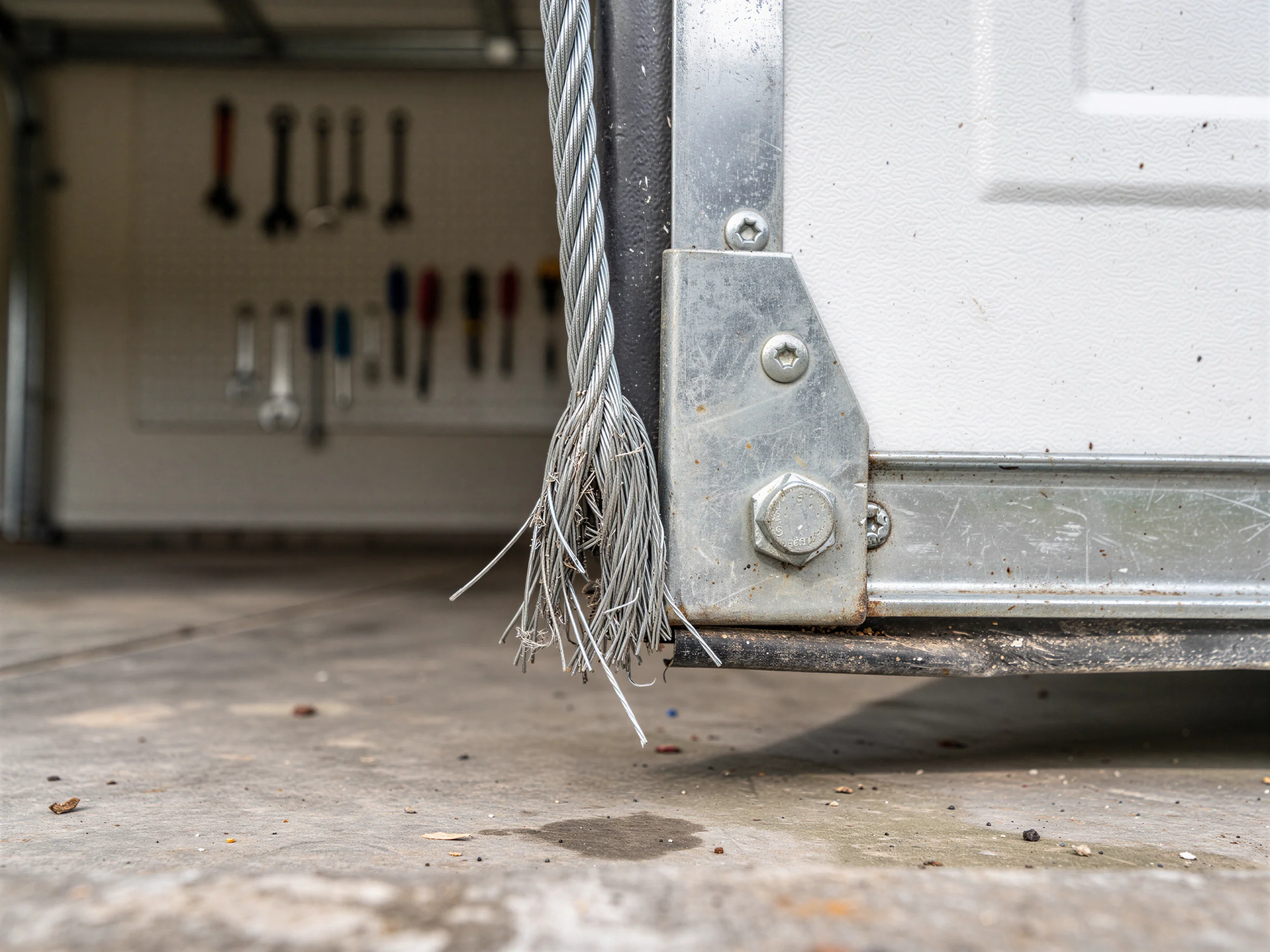
When that happens, the door won't move at all, or it'll drop fast and hard if someone tries to force the opener through it. Cables can fray and snap for the same reason - they're rated for a cycle count, and a forty-year-old door has usually used up most of it.
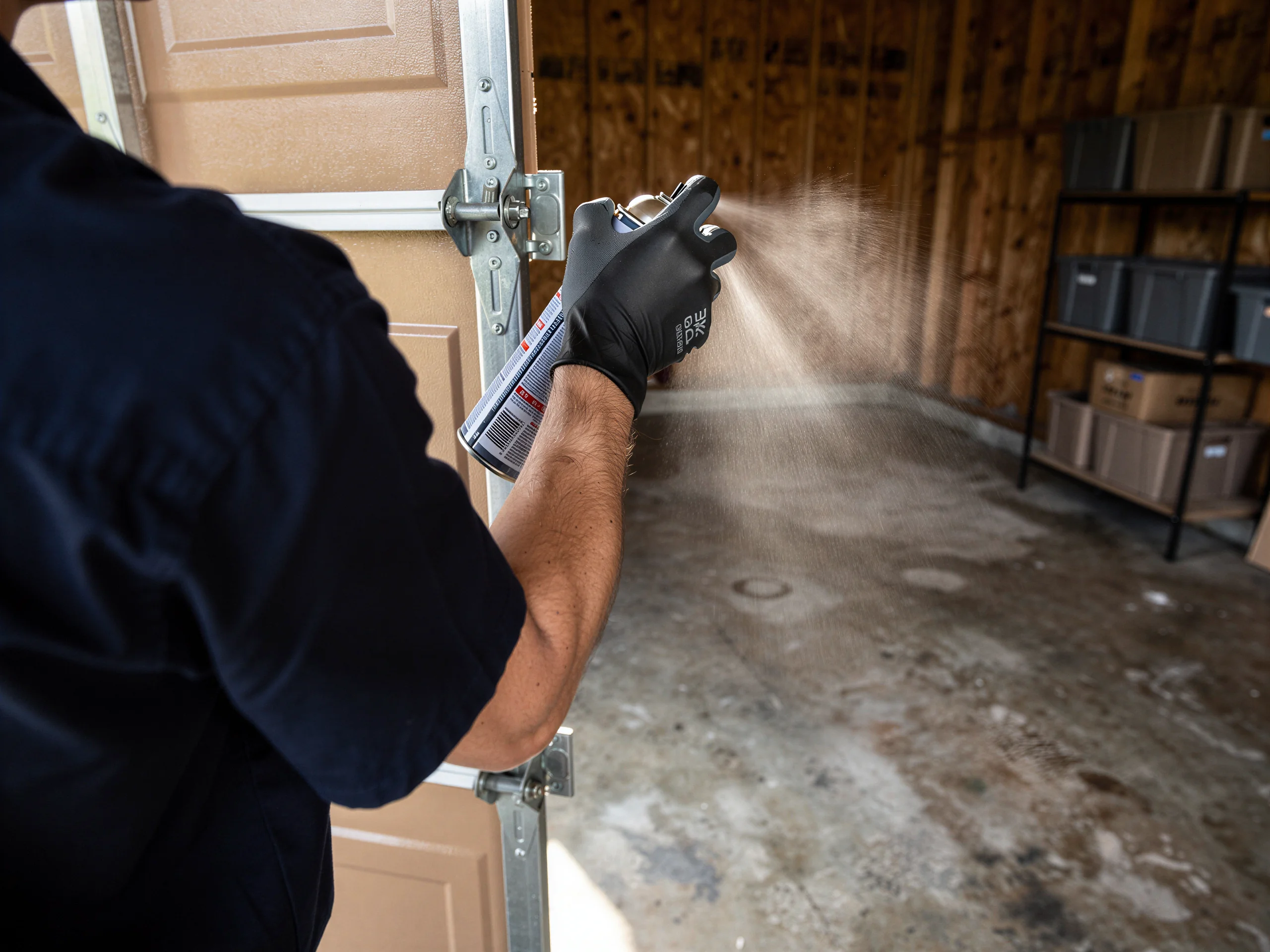
A second pattern, more specific to the cold-moderate climate here, is hardened old grease seizing a roller or hinge mid-cycle, which throws the door off its track. On an older panel door, that can bend the track enough that it needs replacing along with the roller.
We serve Jefferson City and the surrounding area, including Holts Summit, St. Martins, New Bloomfield, Westphalia, Russellville, Ashland, Mokane, Linn, and Eugene, and the pattern holds across that whole stretch of similar-aged housing.
Questions
Because a large share of the housing here was built between 1938 and 2003, with a median around 1974, a lot of doors are still running original torsion springs. Those springs have a rated cycle life, and combined with the cold-moderate winters here, they tend to lose tension and fail outright rather than just squeak.
Sometimes. If the panels and track are sound and it's just a spring or cable, repair makes sense. But on a door from the 1960s-70s stock common in the older neighborhoods, if the panel is rotted or the track is bent too, we'll tell you replacement is the better money - we don't stack repairs on a door that's already failing.
Jefferson City sits in a cold-moderate climate band, so steel hardware contracts overnight and grease stiffens. On an older spring that's already near the end of its life, that daily cold-to-warm swing is often what finally snaps it, which is why we get more spring calls through the colder months.
Yes, we cover the surrounding area including Holts Summit, St. Martins, New Bloomfield, Westphalia, Russellville, Ashland, Mokane, Linn, and Eugene, which share a lot of the same older housing stock and winter conditions as Jefferson City itself.
Explore more
Ready when you are
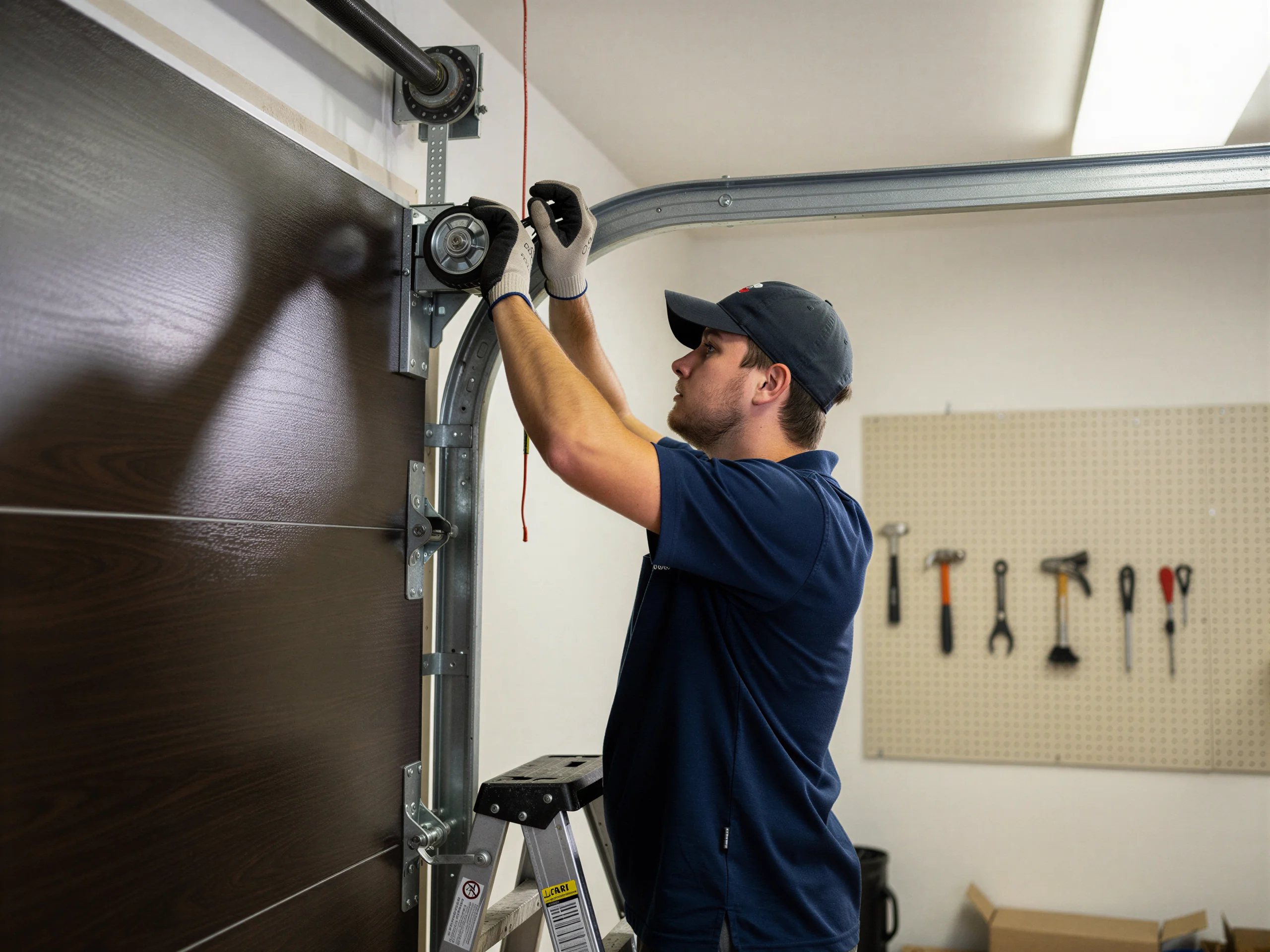
Jefferson City Garage Door Pros repairs and installs garage doors, springs and openers in Jefferson City, MO and the surrounding area.