
Brackets carrying cable tension
Where it stops being a weekend job is the bottom brackets, which carry cable tension, or any roller near a bent or rusted track section - the kind of corrosion we see on the older stock across this area.
Jefferson City, MO
Rollers wear out fast on the 1960s-70s doors common across Jefferson City. See why, what to check yourself, and when a roller job turns into more.
Local causes
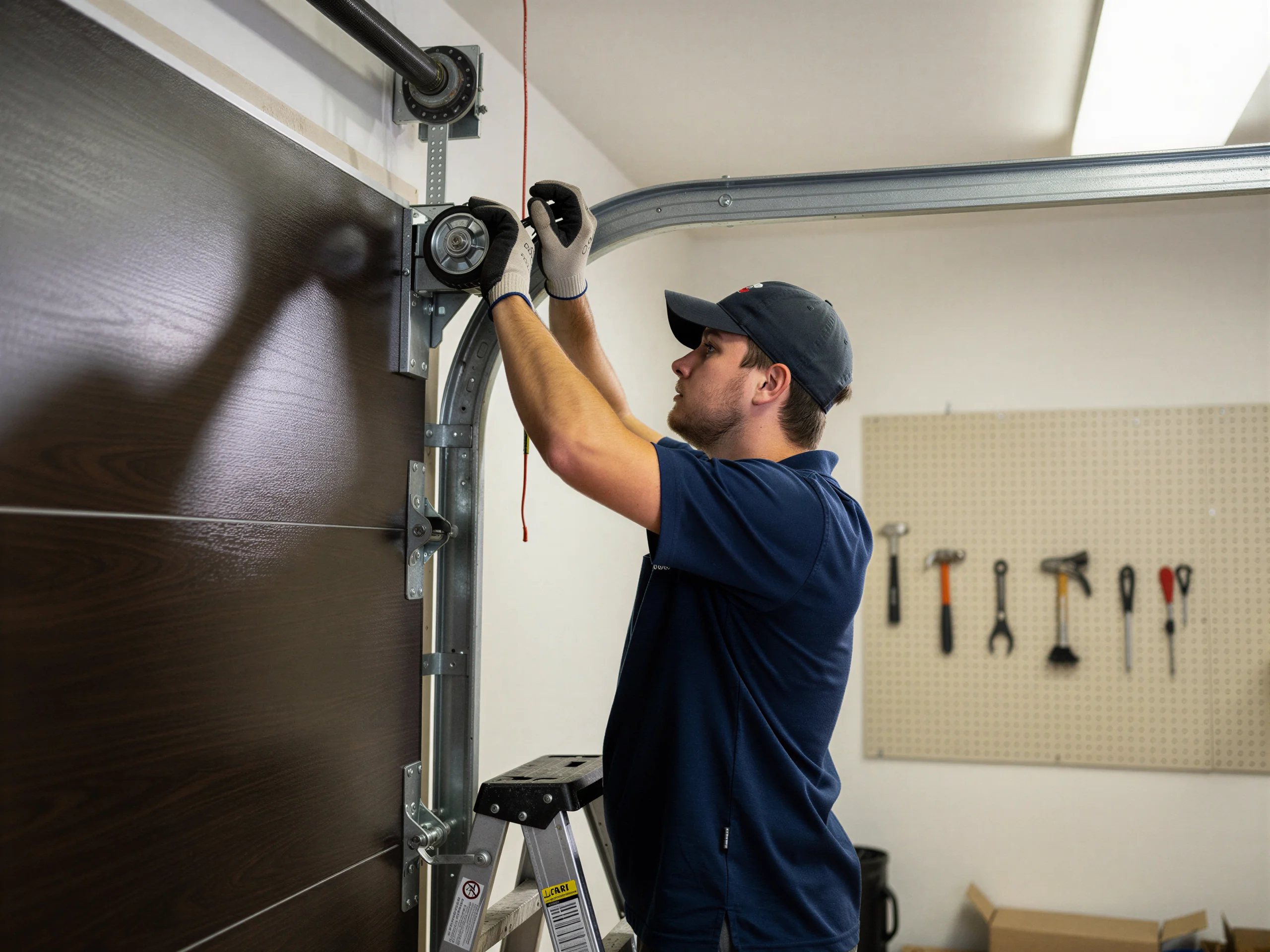
Most of the housing stock across the Jefferson City service area went up between 1938 and 2003, with the bulk of it dating to the 1960s and 70s across the nine areas we cover. Doors from that era were hung on steel track built to looser tolerances than what you'd get today, and a lot of them still have the original rollers or a cheap swap-in from years back. Steel rollers without bearings wear a groove into themselves and into the track at the same time, so by the time you hear the grinding, both parts are already compromised.
The climate here is the other half of it. Jefferson City sits in a cold-moderate band, which means real freeze-thaw cycles every winter. Moisture gets into the track seams, rusts the rail edges just enough to catch a worn roller, and the door starts binding at the same two or three spots on every opening cycle. On a 1970s-built house with original hardware, that combination - old steel rollers plus a track that's corroded at the low points - is close to universal. It's not that one house has bad luck. It's that the housing age and the weather both point the same direction.

DIY or pro
Replacing a nylon roller on a loose panel isn't a hard job if you've got the right stem length and the door is already off its spring tension at that point in the track.
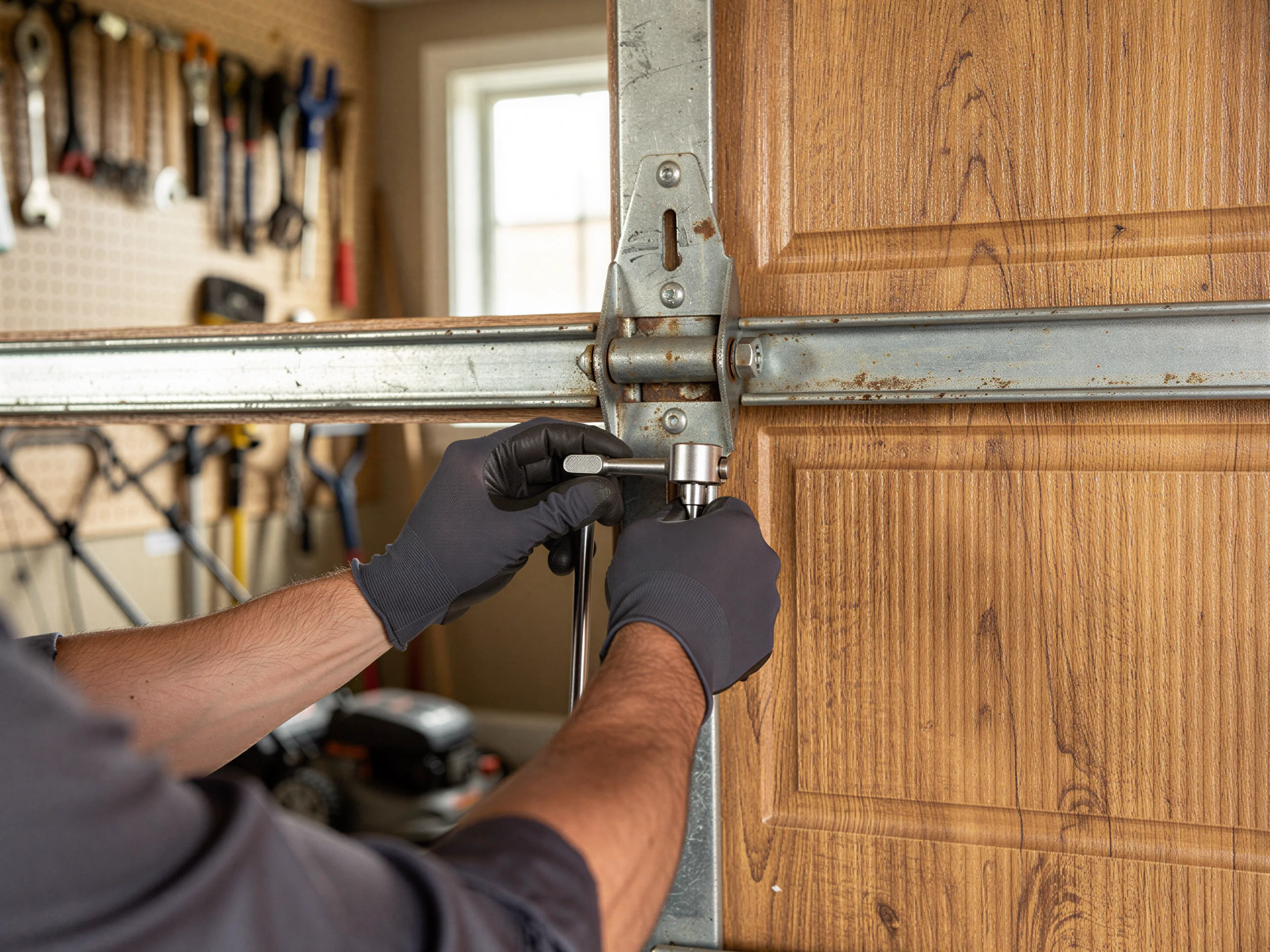
Where it stops being a weekend job is the bottom brackets, which carry cable tension, or any roller near a bent or rusted track section - the kind of corrosion we see on the older stock across this area.
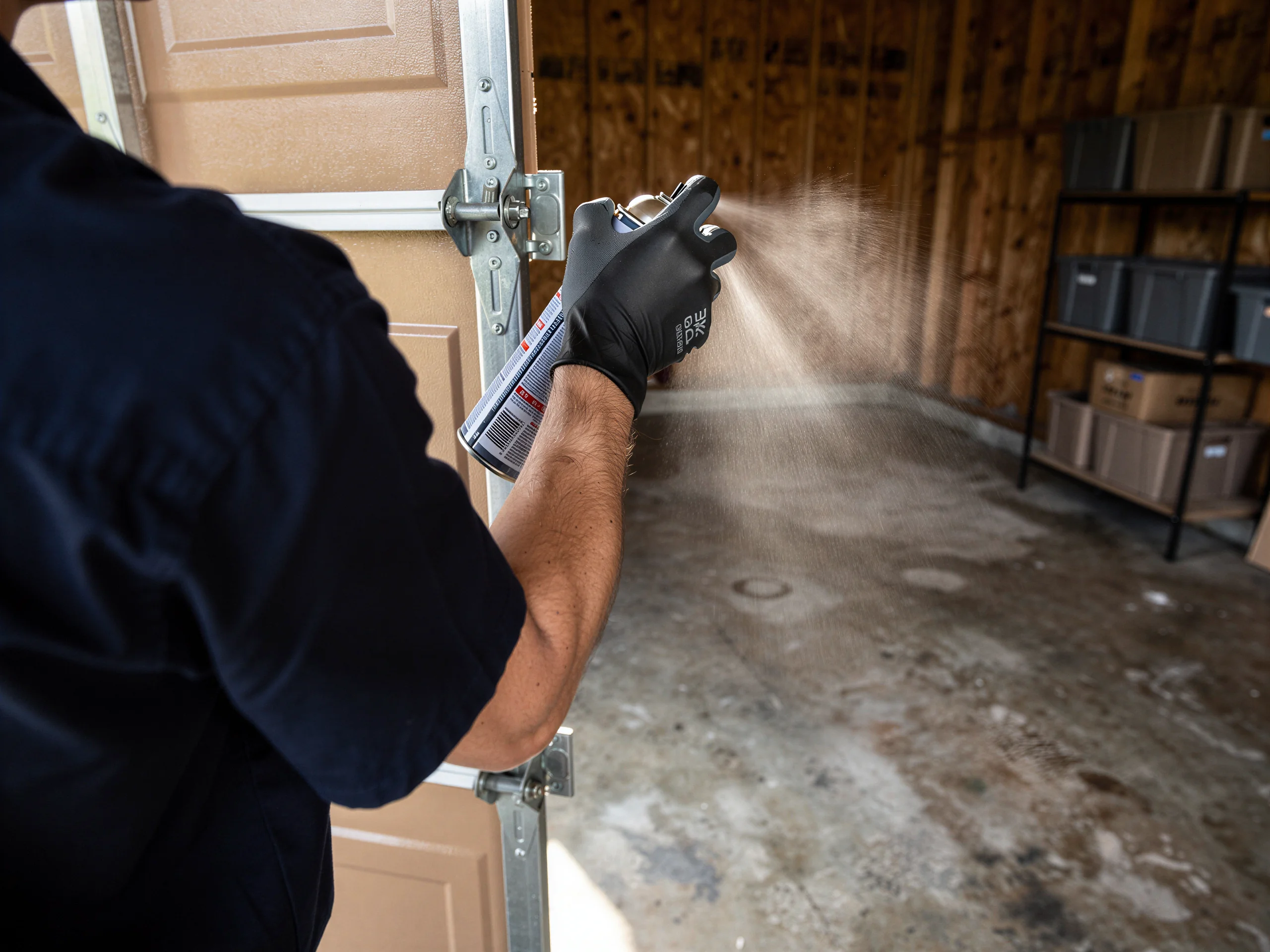
Pull the wrong roller under tension and the cable can jump off the drum. If you're hearing one bad spot in the cycle and the door still opens and closes square, you can often get by checking lubrication first - dry rollers sound like worn ones.
If the noise is at every panel and the door shudders going up, that's wear across the full set, and that's a job where we'd rather quote it than have someone work it out mid-repair.
Warning signs
The classic sign is a rhythmic grinding or clicking that repeats once per panel as the door travels - that's a roller hitting a flat spot or a chipped edge on every rotation.
On the older doors common in this area, you'll often see the roller stem has worn oblong in its bracket hole, which lets the whole wheel wobble instead of rolling true.
Cracked nylon rollers show up as a visible chip or flat face you can feel with a thumb. Rust streaking on the track itself, right where the door stops wobbling into a smoother run, usually marks where a roller has been riding rough for a while.
None of this shows up overnight - it's a slow wear pattern that tracks with how many open-close cycles the door has logged, which is why original hardware on houses built in the 60s and 70s is where we find it most.
Watch-outs
Left alone, a worn roller doesn't stay a small problem. The wobble it introduces puts side load on the hinges and eventually the panel seams, and on doors from the 1960s-70s era the steel is thinner than what's made now, so those seams stress out faster.
A roller that finally seizes mid-track can derail the door entirely, which usually means a bent track section and a call that costs more than the roller swap would have.
We won't try to sell a full roller set on a door that's only showing wear at one or two spots - sometimes it really is a single bad roller and a shot of lube on the rest.
But if the track itself is pitted from years of winter moisture, replacing rollers without addressing the rail is a short fix. That's the honest call: a $20 part job on top of a bad track buys you a few months, not a solution.
Questions
Most residential doors run 10 to 12 rollers depending on panel count, with two per hinge point plus the bottom brackets. On older doors across this area, we usually find uneven wear - the bottom rollers carrying more weight wear out well ahead of the top ones.
Yes, if the rest are still round and riding smooth. We check each roller by hand before quoting - no reason to sell a full set when one or two bad ones are the actual problem.
Houses built in the 1960s and 70s, common across this area, often still run original steel rollers without sealed bearings. Combined with the freeze-thaw winters here, the track corrodes slightly at the low points and accelerates wear on anything rolling through it.
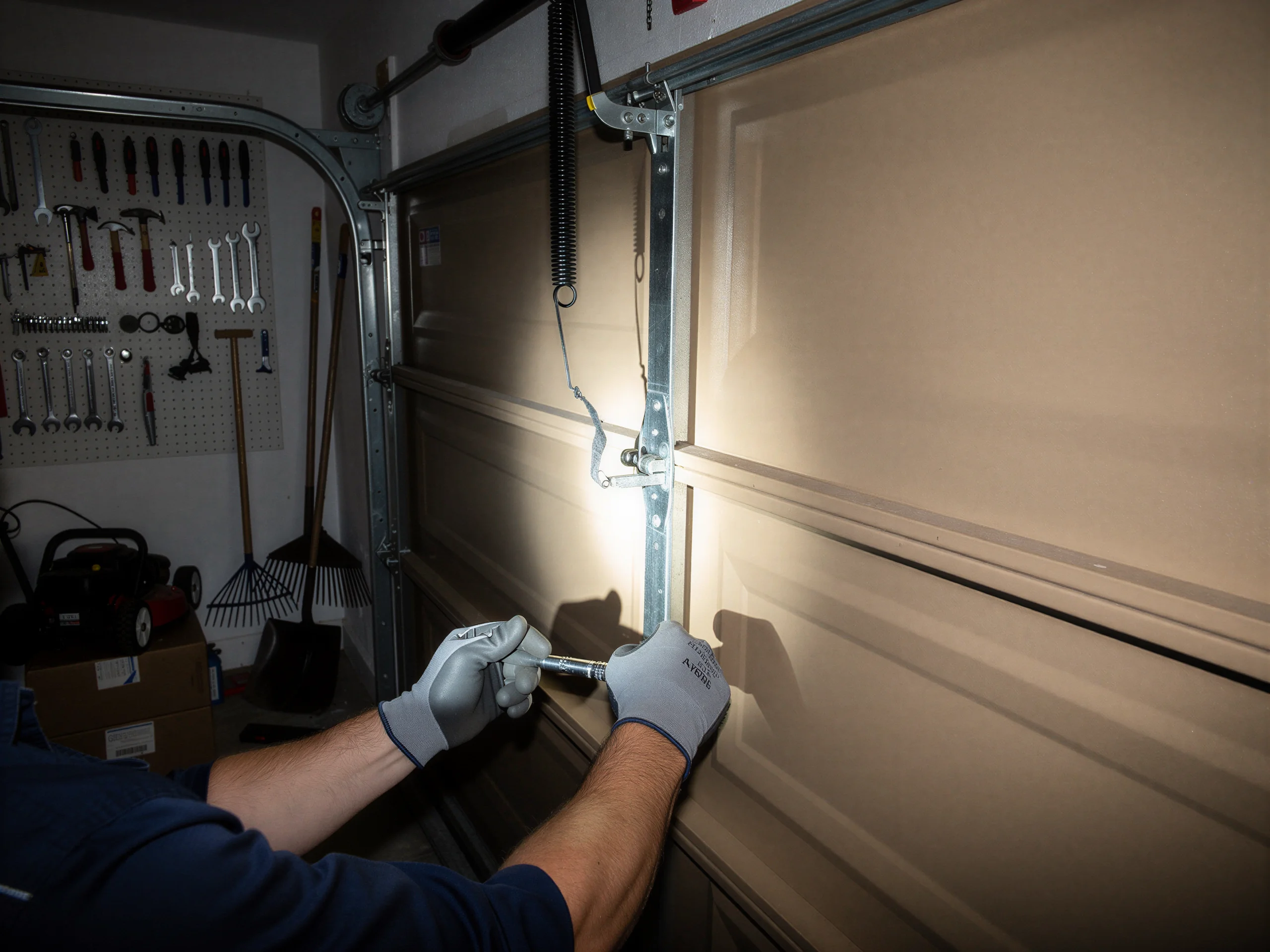
Not always - a dry opener chain or a loose track bracket can sound similar. We check the whole run before quoting roller work, since replacing rollers won't fix a bracket that's worked loose.
Explore more
Ready when you are
Jefferson City Garage Door Pros repairs and installs garage doors, springs and openers in Jefferson City, MO and the surrounding area.