Blog
Is Your Old Garage Door Worth Fixing or Replacing?
Jefferson City houses mostly date from the 1960s and 70s, with stock running back to 1938. Here's how to tell if your door's worth repairing or replacing.
The Problem
Jefferson City's housing stock runs from 1938 up through 2003, with most of it concentrated in the 1960s and 70s across the nine areas that make up this service area. That means a lot of doors out there are original or close to it - not the door itself, usually, since panels get swapped out over the decades, but the track, the hinges, and the opener hardware behind it. A door from a 1968 build and a door from a 1995 build fail in different ways, and the fix that makes sense for one is a waste of money on the other.\n\nThe hard part for a homeowner is that a sagging door and a dying door look almost identical from the driveway. Both drag on the track. Both make the opener strain. One is a $20 roller. The other is a frame that's out of square because the house itself has settled over fifty-plus years, and no amount of adjusting the track will fix that. You need to know which one you're looking at before you call anyone, because that's the difference between a quick job and a conversation about replacement.
What to Check
Start with the springs. If the house was built before the mid-1970s, there's a decent chance the spring system has already been replaced once or twice - springs don't last fifty years regardless of climate. Look at the winding cones and the cable drums for rust pitting, not just surface rust. Pitting means the metal's weakening from the inside, not just the outside.\n\nNext, check the track alignment with a level, not your eye. Houses in this area that date to the 1960s and 70s stock have had decades to settle, and a track that was plumb in 1972 may not be plumb now. If the gap between door and frame is uneven top to bottom, that's the house talking, not the door.\n\nLast, run the opener's auto-reverse test - set something flat in the door's path and close it. If it doesn't reverse, that's not a maintenance item, that's a safety item, and it doesn't matter how old or new the door is behind it. Fix that one regardless of what else you decide.
What You Pay
We don't publish a flat number here because what a door costs to fix depends entirely on what's actually wrong, and in a town with housing spanning 1938 to 2003, two doors three streets apart can need completely different work. A worn roller and a cracked bottom panel aren't the same job as a snapped torsion spring with a bent shaft underneath it.\n\nWhat we can tell you: if you're looking at a door original to a house built in the 1960s or 70s - which describes a large share of homes in this area - a repair bill that approaches half the cost of a new door is the signal to stop patching. At that point you're paying to extend the life of hardware that's already outlasted its expected run, and the next failure is coming regardless. We'll tell you straight when a job isn't worth doing, even if that costs us the sale.
What the Weather Here Does to It
This area sits in a cold, moderate climate band, which means the door hardware goes through a real freeze-thaw cycle every winter, not just a few cold snaps. That cycle is hard on steel springs and on the grease in the rollers and hinges - grease that's fine in July gets stiff in January, and a door that opened smooth all fall suddenly groans and strains in the cold.\n\nFor older doors, especially the ones tied to houses built decades back, this matters more than it would on newer hardware. Metal fatigue that's been building for years tends to show itself on the first hard cold morning of the season, because cold steel is less forgiving steel. If your door has been fine all autumn and suddenly fights you the first freezing week, that's not a coincidence - that's the cold finding the weak point that was already there.
Questions
Common questions
How old does a garage door have to be before replacement makes more sense than repair?
There's no single age cutoff - it depends on the hardware, not the calendar. But given that a lot of homes in this area date to the 1960s and 70s, a door that's original to the house and now needs its second or third major repair is usually past the point where fixing it is the better bet.
Why does my garage door get harder to open every winter?
This area sits in a cold, moderate climate band, and the freeze-thaw cycle stiffens grease and stresses metal that's already fatigued. If the door's fine in fall and fights you once it gets cold, that's usually an existing weak point the cold is exposing, not a new problem.
Do you serve areas outside Jefferson City?
Our service area covers Jefferson City and the surrounding towns, including Holts Summit, St. Martins, New Bloomfield, Westphalia, Russellville, Ashland, Mokane, Linn, and Eugene.
Recommendation
You Might Also Like
More garage door guides for Jefferson City homeowners.
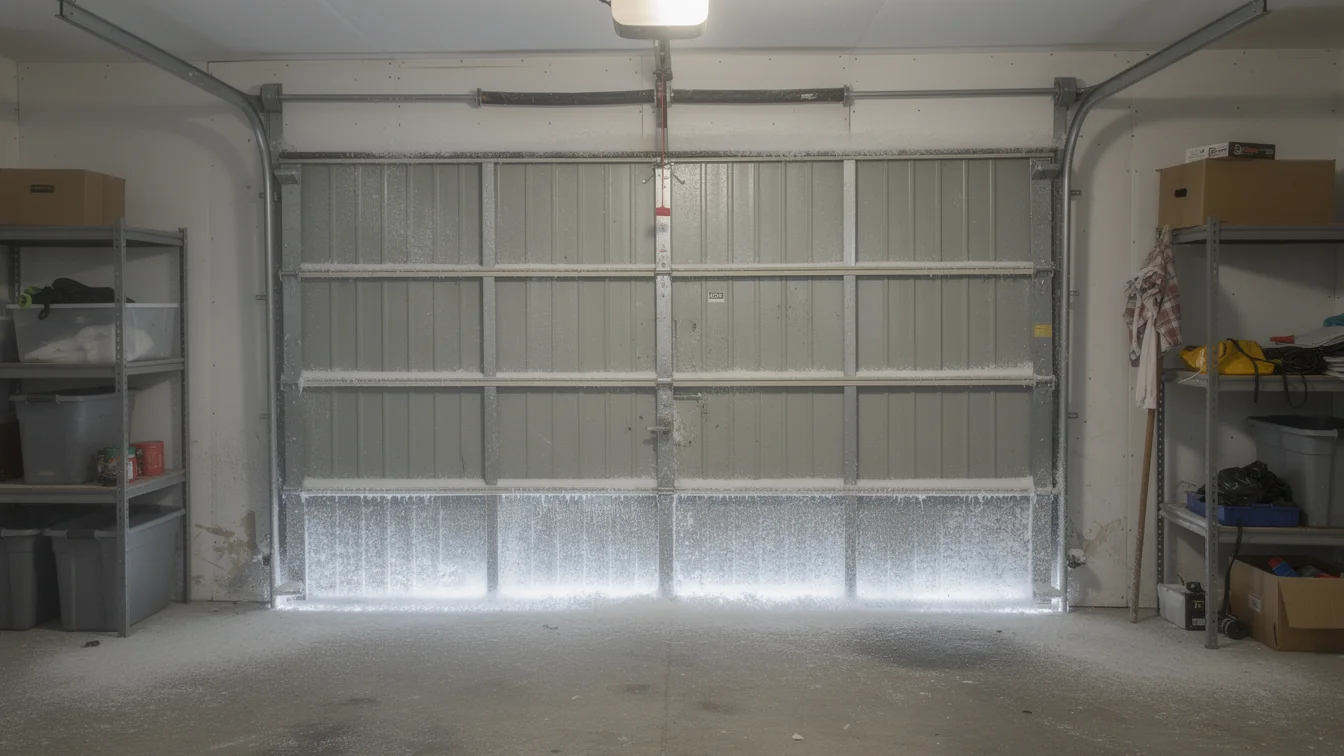
What's Actually Wrong With Your Garage Door
A look at why garage doors fail on Jefferson City's 1960s-70s housing stock, what to check first, what drives the cost, and how the cold here wears out hardware.
Read guide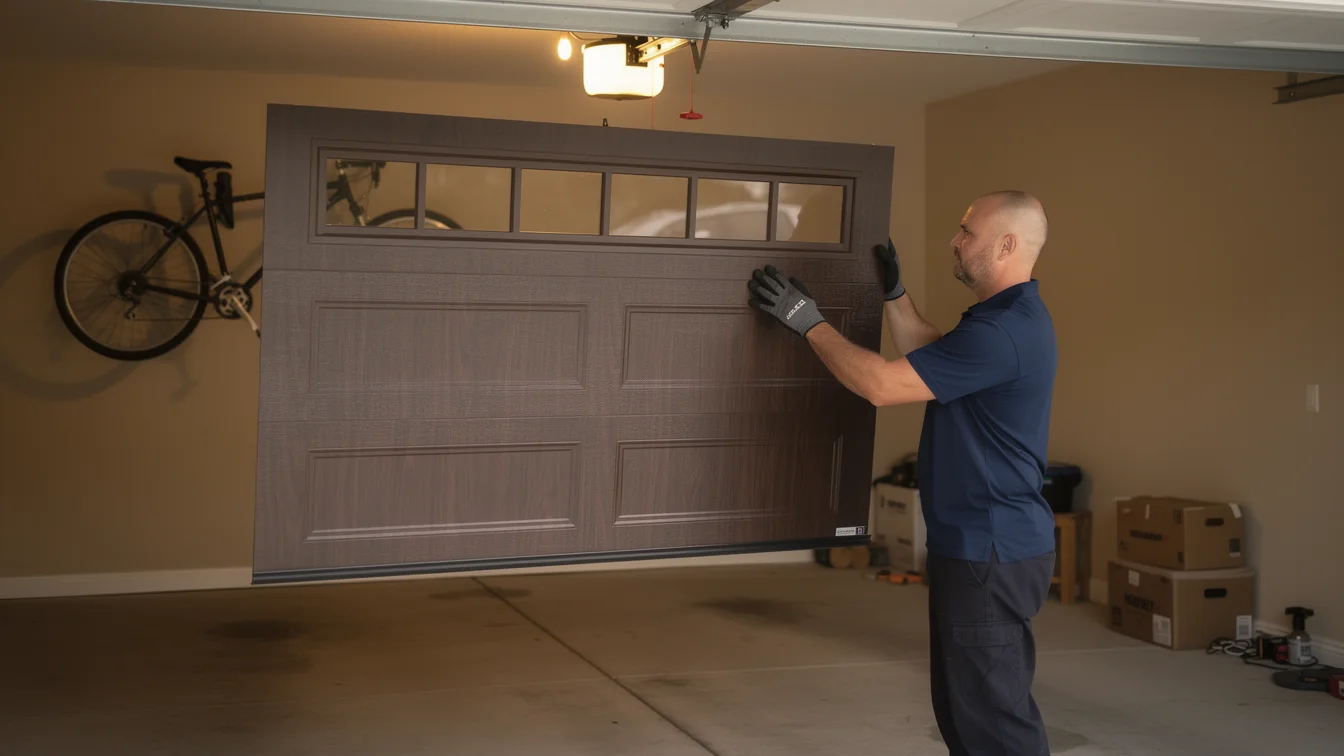
What That Noise Actually Means
A grinding, popping, or screeching garage door in Jefferson City usually points to one of a handful of causes tied to the age of the hardware.
Read guide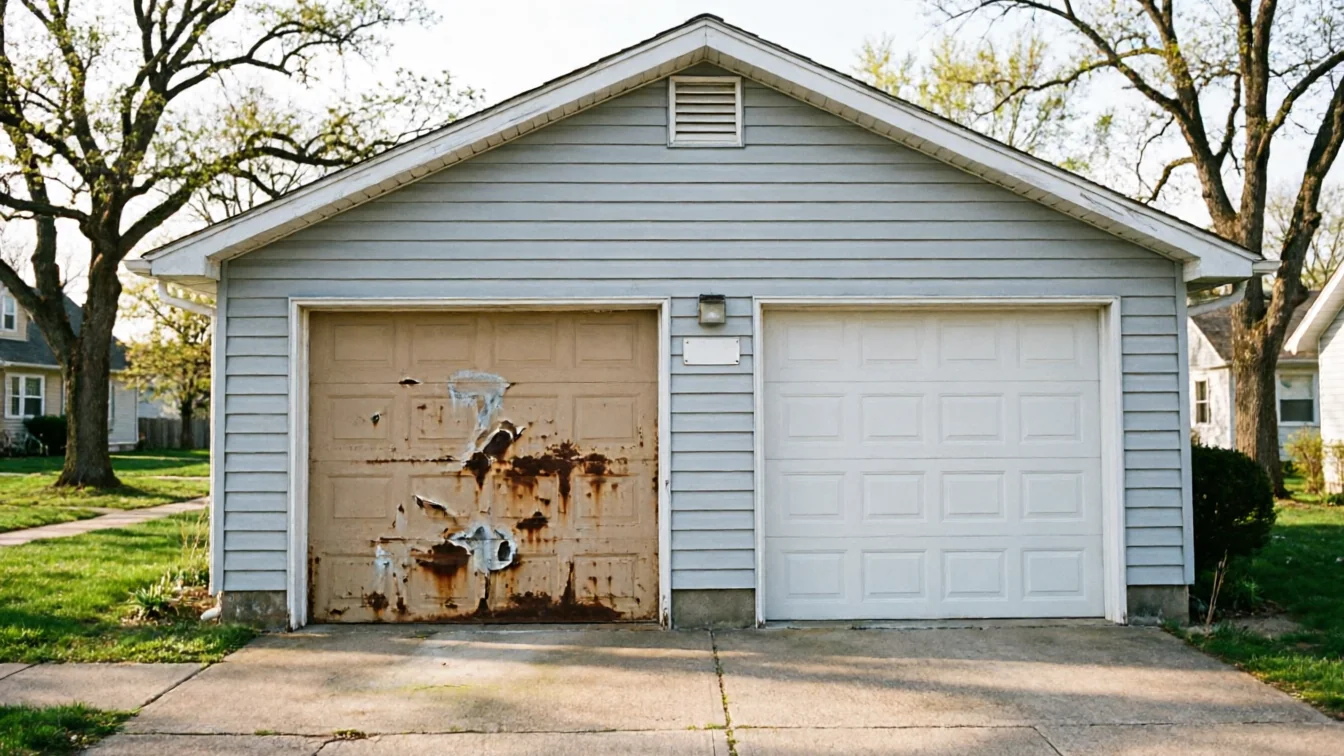
When the Opener Dies and the Power Goes With It
Why older Jefferson City homes lose opener power in storms, what to check before you call, and what the 1960s-70s housing stock here means for repairs.
Read guideReady when you are
Need a garage door sorted in Jefferson City?
Jefferson City Garage Door Pros repairs and installs garage doors, springs and openers in Jefferson City, MO and the surrounding area.